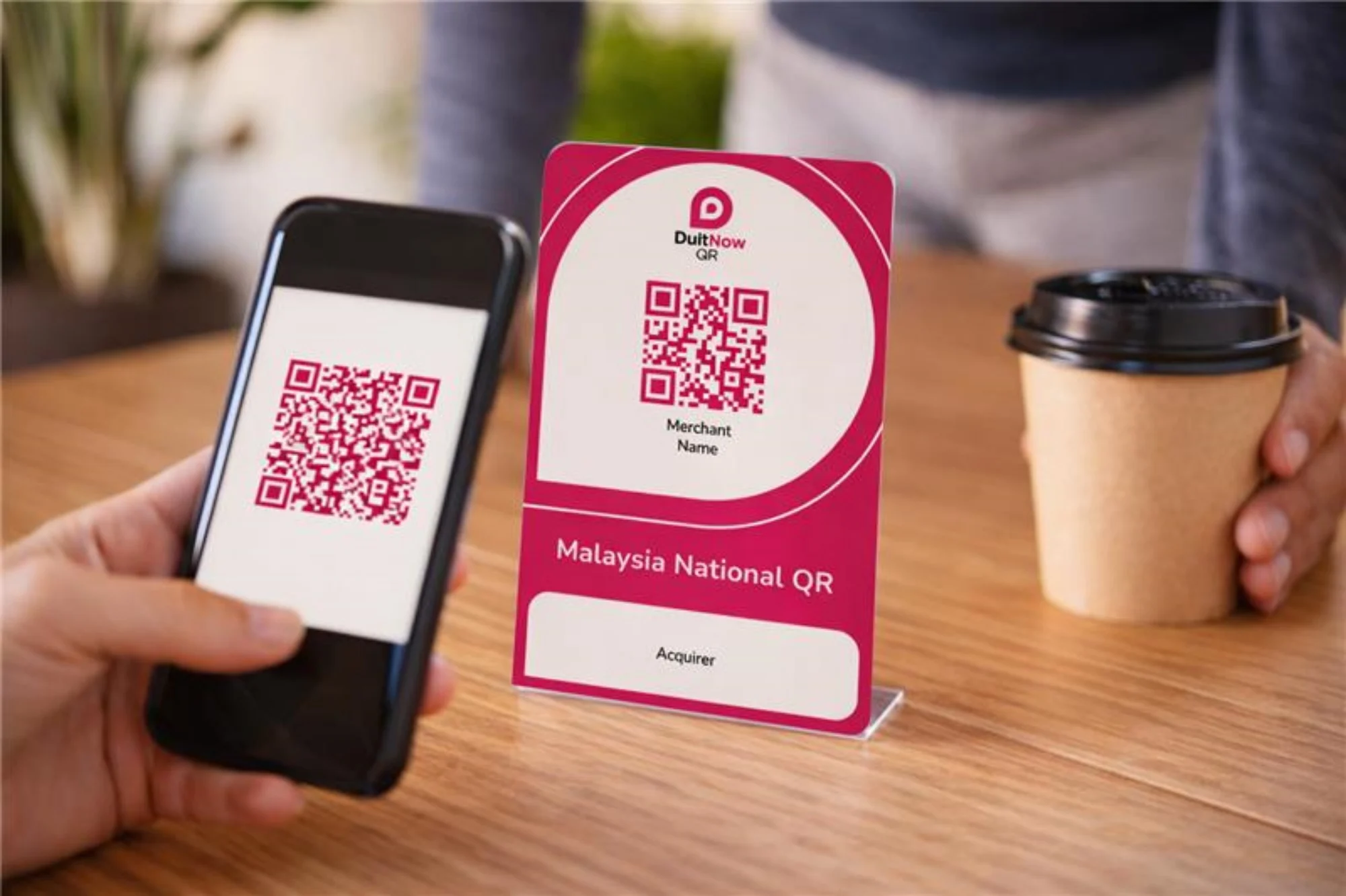
Bank Negara Malaysia (BNM) has announced plans to phase out proprietary QR payment networks over the next two years as part of its push towards a fully interoperable QR payment ecosystem. Under the central bank’s newly issued Interoperable Fund Transfer Framework (IFTF), existing proprietary systems must cease operations by 30 June 2028, while affected payment providers can no longer onboard new merchants onto these networks during the transition period.
The policy aims to ensure consumers can use any participating bank or e-wallet app to make QR payments, regardless of which financial institution or payment provider serves the merchant. Instead of relying on separate closed payment systems, all participating providers will connect through Malaysia’s shared national payment infrastructure.

What Are Proprietary QR Payment Networks?
A proprietary QR payment network is essentially a closed payment ecosystem operated by an individual bank or e-wallet provider. In these systems, merchants and customers typically need to use the same provider’s payment service, or remain within a limited network of supported participants, for QR payments to work.
For example, some merchants may display QR codes that only accept payments through a specific e-wallet or payment application instead of working universally. While many Malaysians today already encounter interoperable DuitNow QR codes, proprietary QR schemes continue to exist for certain payment providers, merchant programmes, or closed ecosystems that operate separately from the national network.
By comparison, DuitNow QR allows merchants to display a single QR code that can accept payments from participating banks and e-wallets. This eliminates the need to maintain multiple QR codes from different providers.

All QR Payments To Move Onto PayNet’s Shared Infrastructure
Under the new framework, banks offering QR payment services must participate in the country’s shared payment infrastructure and allow their customers to pay merchants served by any participating merchant acquirer. Likewise, merchant acquirers must ensure their merchants can accept payments from customers of every participating financial institution.
The shared infrastructure refers to the Real-time Retail Payments Platform (RPP) operated by Payments Network Malaysia Sdn Bhd (PayNet), which powers services such as DuitNow Transfer and DuitNow QR. According to PayNet, DuitNow QR already enables consumers to pay merchants using a single QR code through participating banking and e-wallet applications.
It should be noted that PayNet itself is 35.5% owned by BNM. The remaining shares are held by 11 Malaysian financial institutions, including Malayan Banking (Maybank).

Interoperability Will Reduce Market Fragmentation
The central bank noted that electronic payments continue to see strong adoption in Malaysia, driven largely by mobile banking. According to BNM, the average Malaysian now performs at least 1.5 electronic payment transactions every day.
BNM added that this growth has been supported by the country’s shared payment infrastructure, which connects both bank accounts and non-bank e-money accounts for fund transfers as well as merchant payments. The central bank believes expanding interoperability further will improve the overall payment experience while preventing fragmentation across different QR payment ecosystems.

Two-Year Transition Period
During its public consultation, BNM said most respondents supported prohibiting proprietary QR payment schemes, agreeing that a common interoperable network would benefit consumers and merchants alike. However, some industry players expressed concerns that migrating entirely to the national interoperable QR network could involve significant implementation costs. Others also worried that moving away from their own proprietary systems could limit their ability to offer customised loyalty programmes, rewards, and marketing campaigns.
BNM nevertheless maintained that PayNet has confirmed providers will retain the flexibility to develop loyalty programmes, marketing initiatives, and other value-added services within the shared payment infrastructure. Due for 2028, the two-year transition period would allow affected institutions sufficient time to adapt their systems and business models.
(Source: BNM [official website] / The Edge Malaysia)