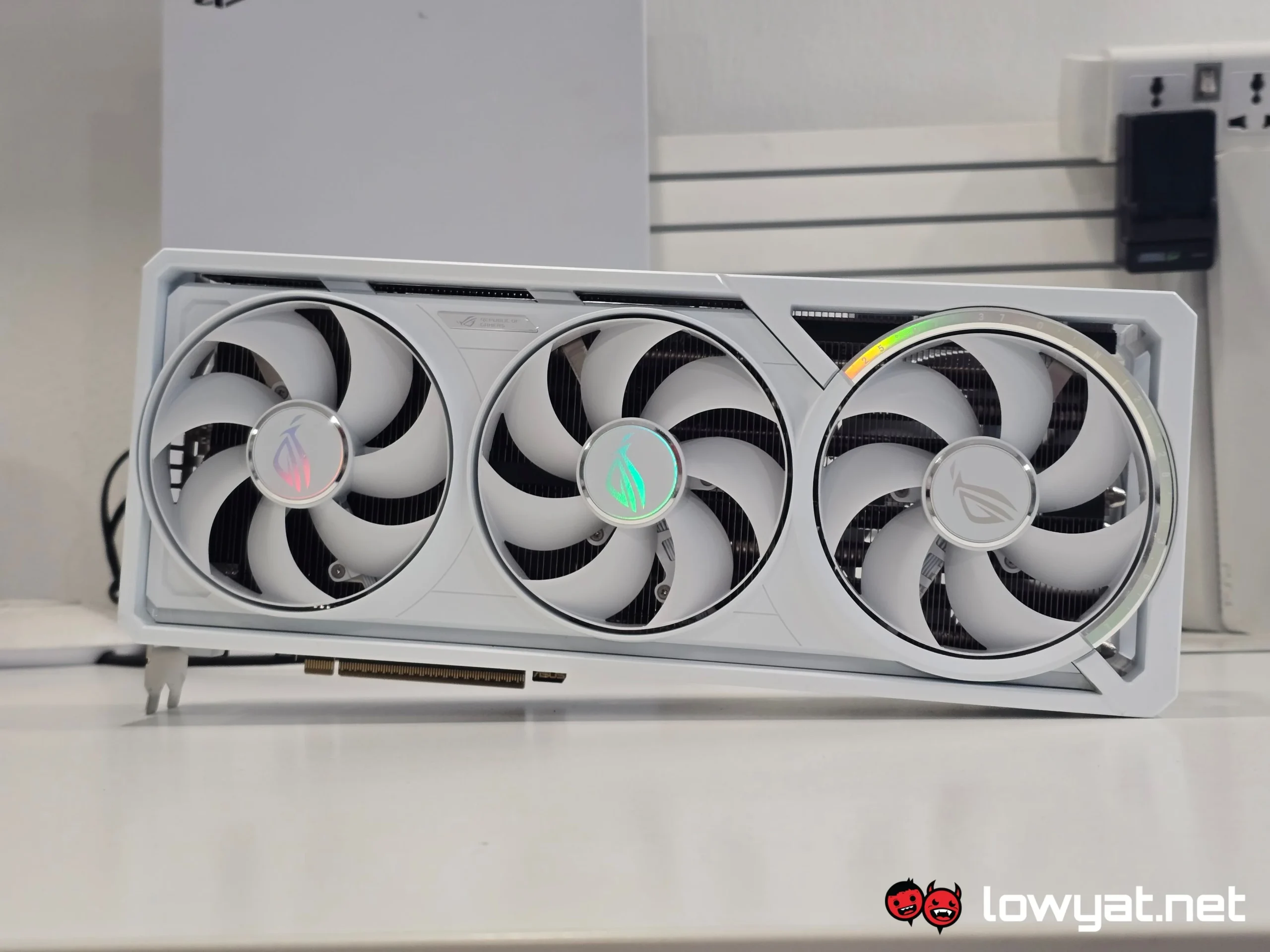
It’s been a while since we last reviewed an RTX 5080, and while the ASUS ROG Astral RTX 5080 has been out for a while, the card has been on our wishlist of GPUs we’d like to play around with.
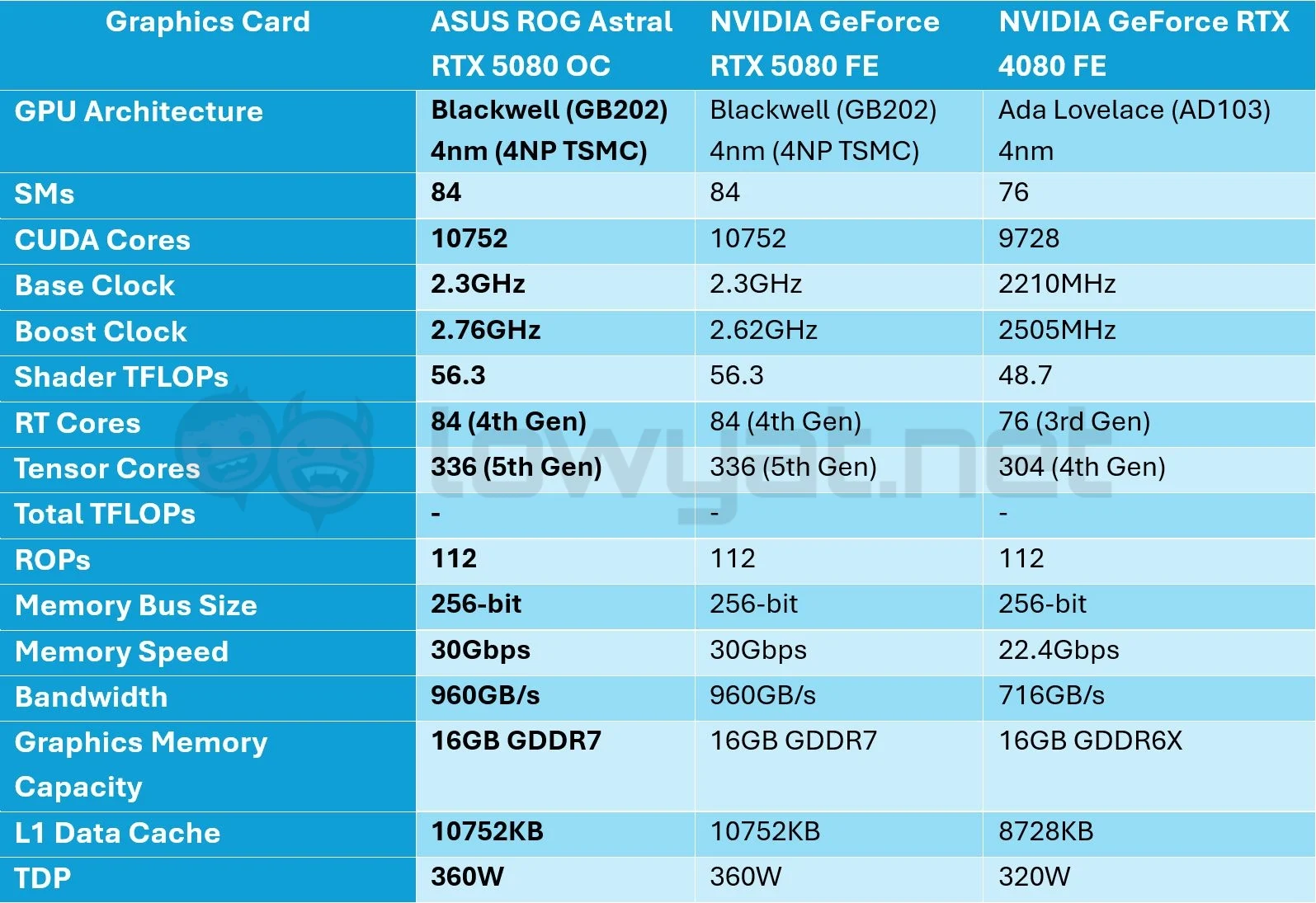
Equipped with an impressively chunky cooling solution and a boost clock that ranks it as one of the highest overclocks for a GPU of its class, we’re here to answer that obvious question: How does it perform? Well, here’s what we managed to eke out of the card.
Specifications
Design
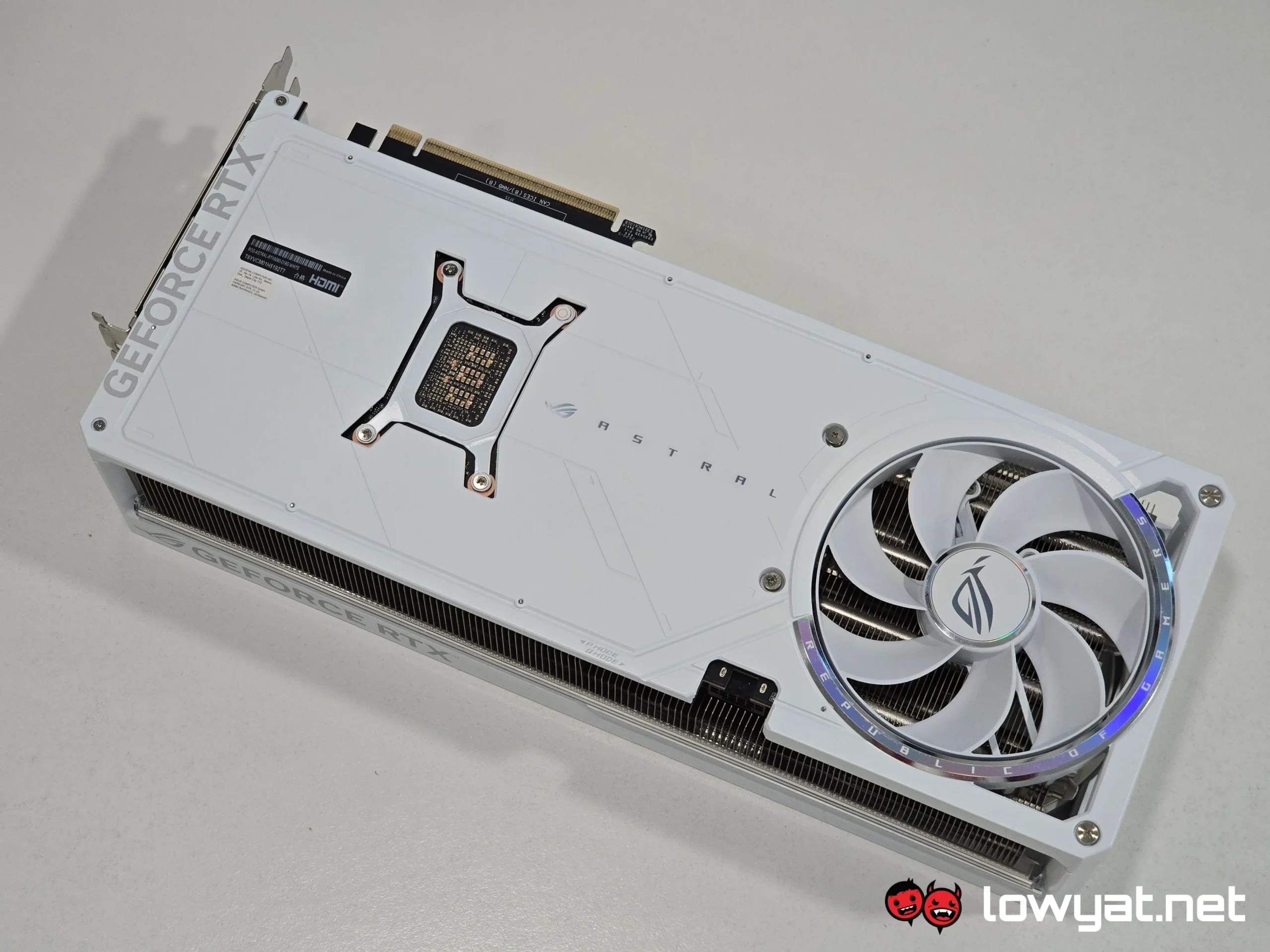
Considering that the Astral RTX 5080 has been out on the market for a while now, it’s unlikely that you, dear readers and PC enthusiast, would be unfamiliar with its design and aesthetics, especially after all the exposure that the Dhahab Edition RTX 5090 and RTX 5080 received when they launched last year.
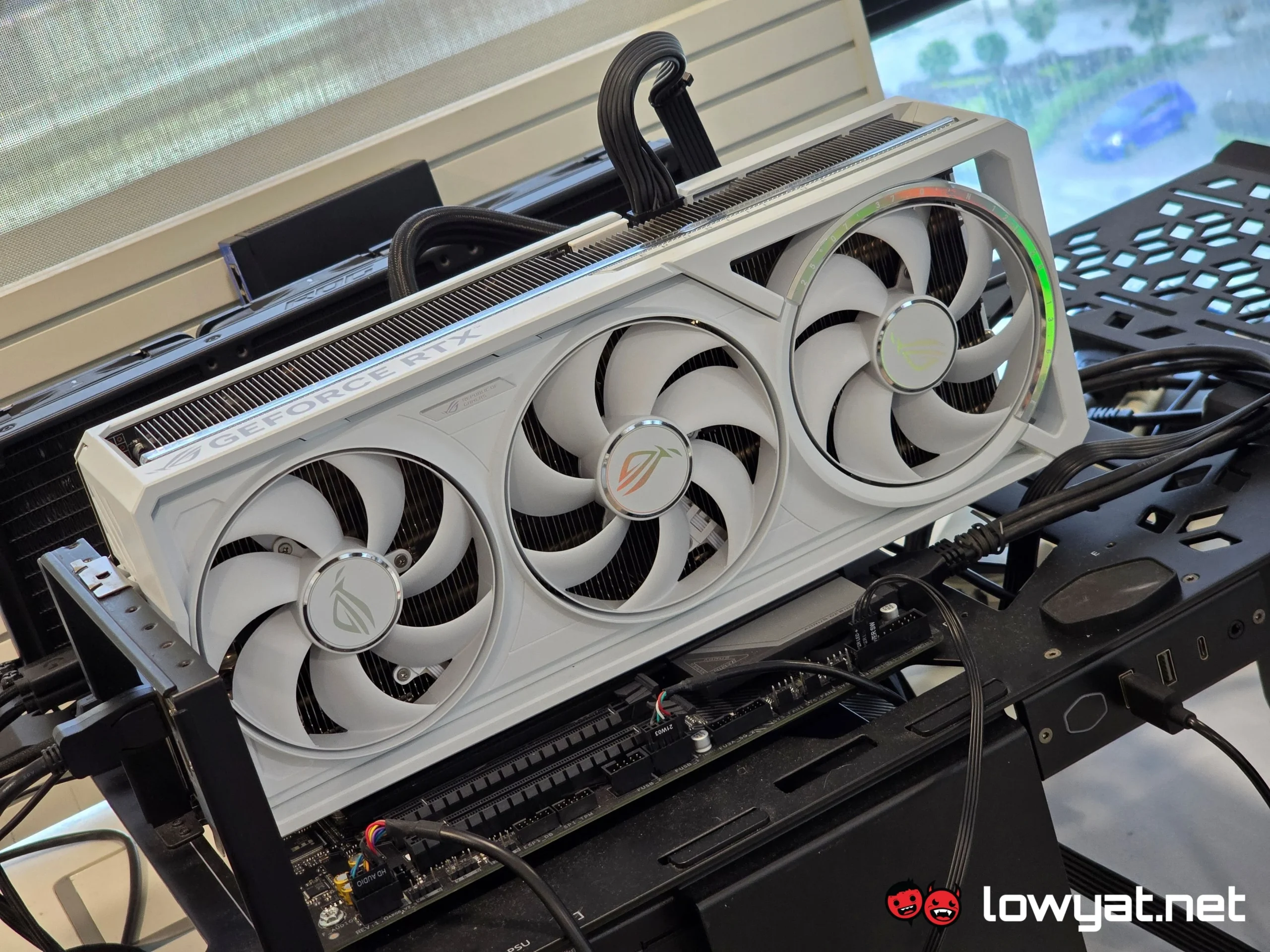
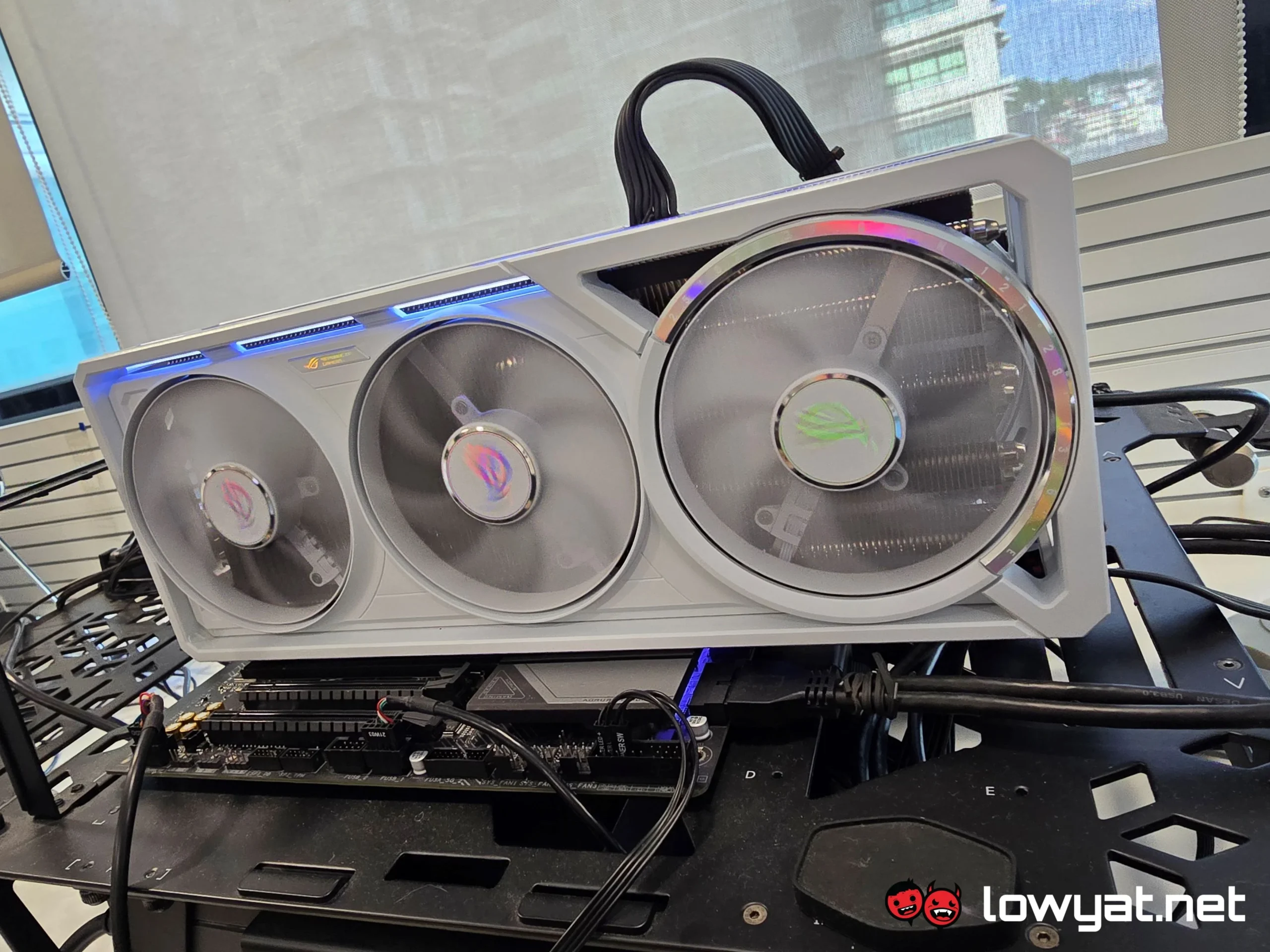
That aside, the aesthetics of the Astral RTX 5080 come with a quad-fan configuration: three in the front, and one right in the back of the fan closest to the tail end of the card. Basically, an homage or rather, a tip of the hat to NVIDIA’s Double Flow Through, or in this case, the Dual Axis Flowthrough design that started with the RTX 30 Series.
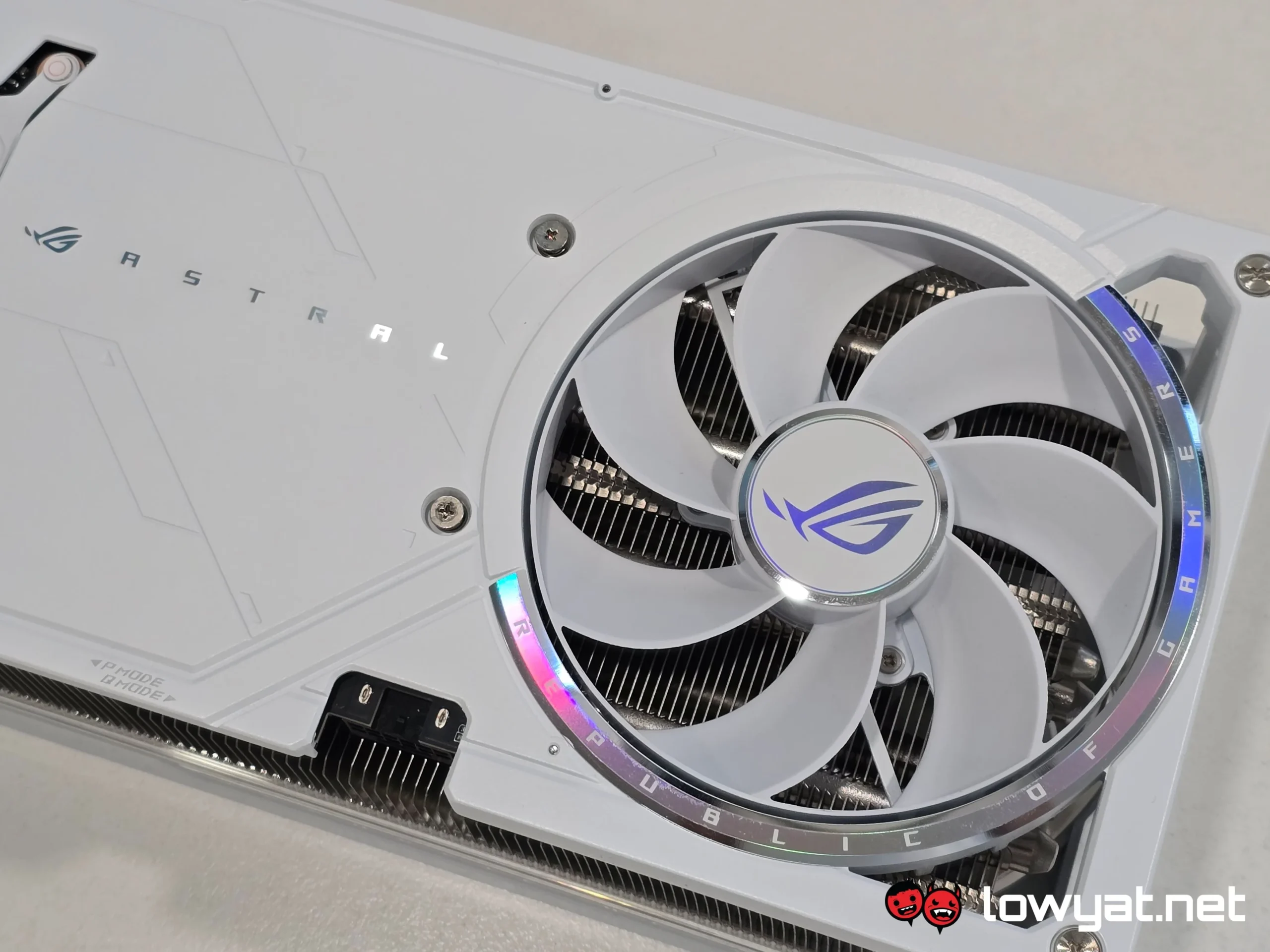
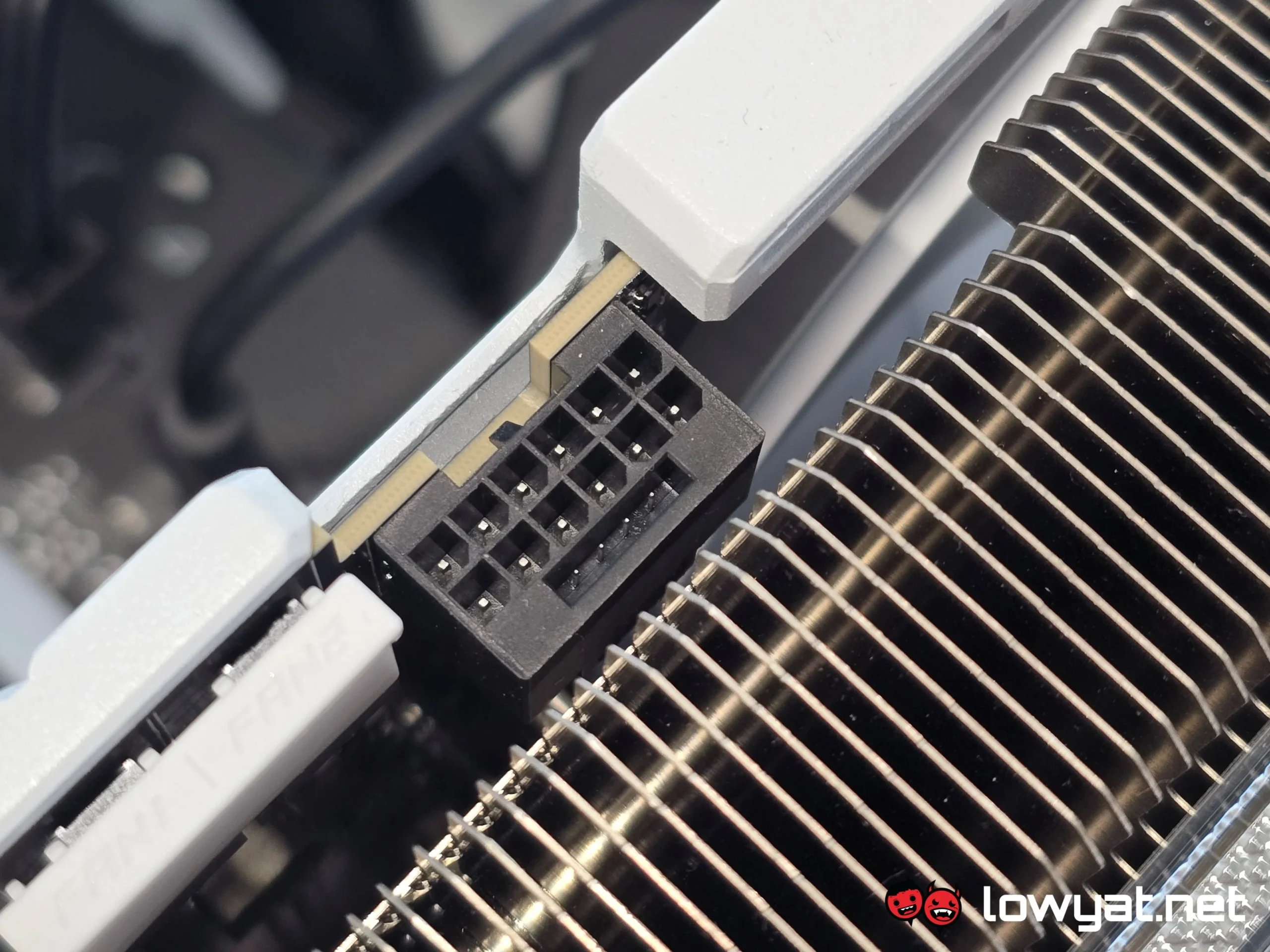
On that note, the Astral RTX 5080 is chonky (read: thicc) boy, with all that metal taking 3.8-slots in a casing. On the testbench, it really stands out, and that’s before you take the Aura lighting RGB LEDs into consideration.
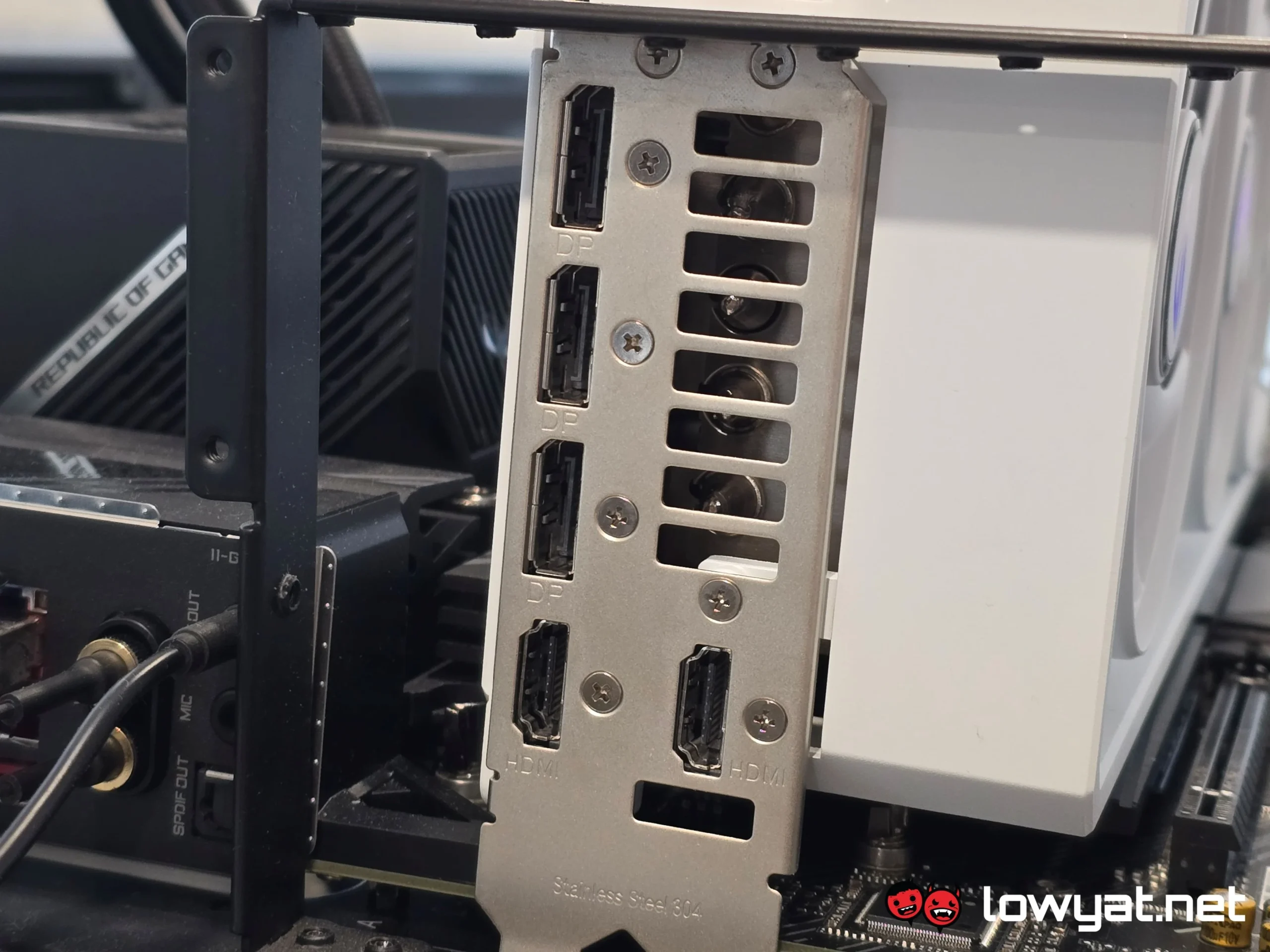
As is the case with virtually all of NVIDIA’s AIB partner cards, the Astral RTX 5080 features a built-in, one-click BIOS switch that allows users to choose between a preset Performance mode (P-Mode) and the more power-efficient Quiet mode (Q-Mode). For ports, the card comes with the standard three DisplayPort ports and two HDMI ports.
Testbench
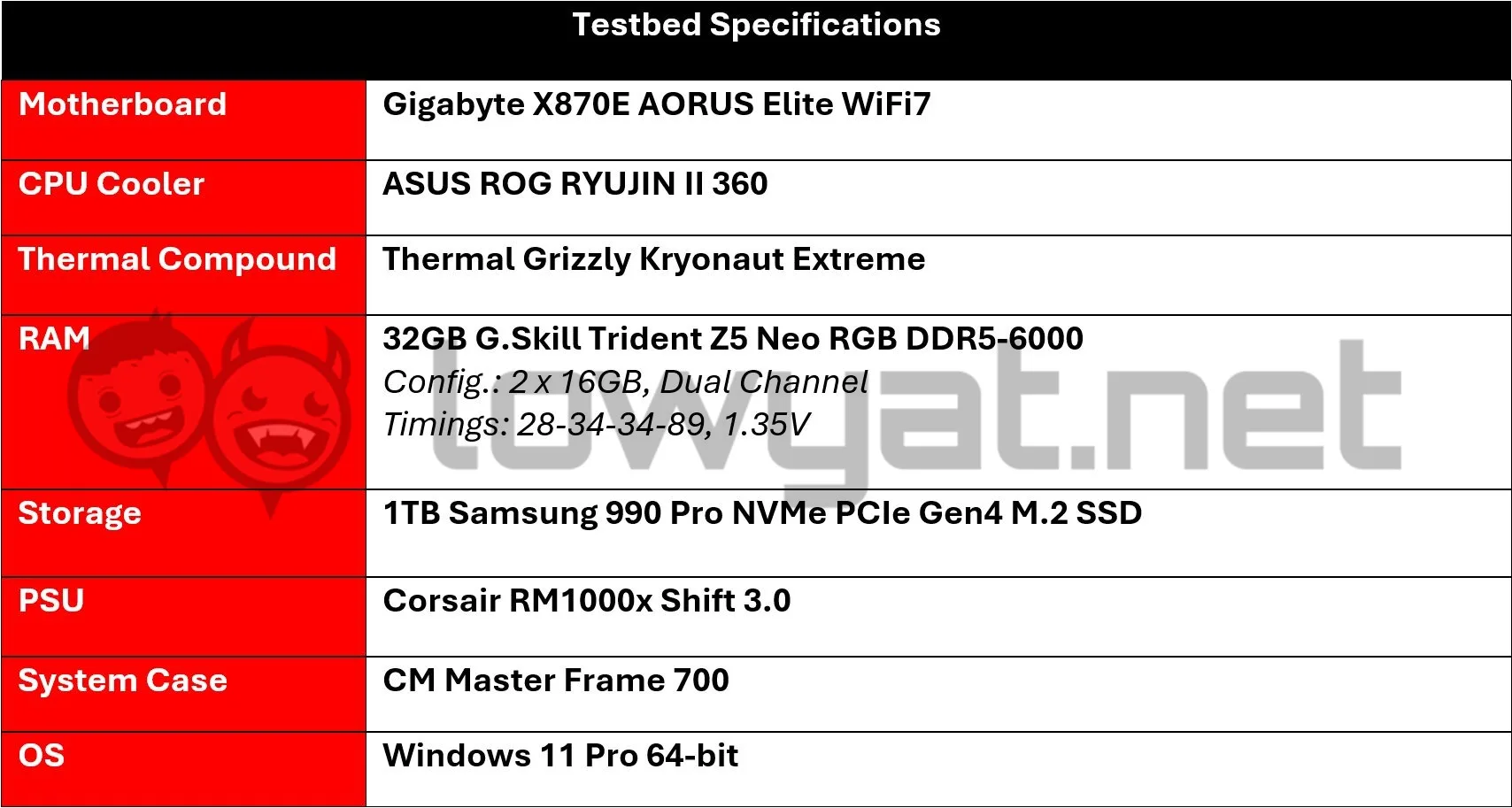
Then, as now, my testbed includes the Ryzen 9 9950X, along with 32GB DDR5-6000 RAM. For comparison, I will be comparing it to the RTX 5080 FE, as a baseline.
I’ve also streamlined the list of control titles for real-world benchmarking, as some of them do take more of an advantage from NVIDIA’s current iteration of its upscaling technology.
Benchmarks, Temperature, And Power Consumption
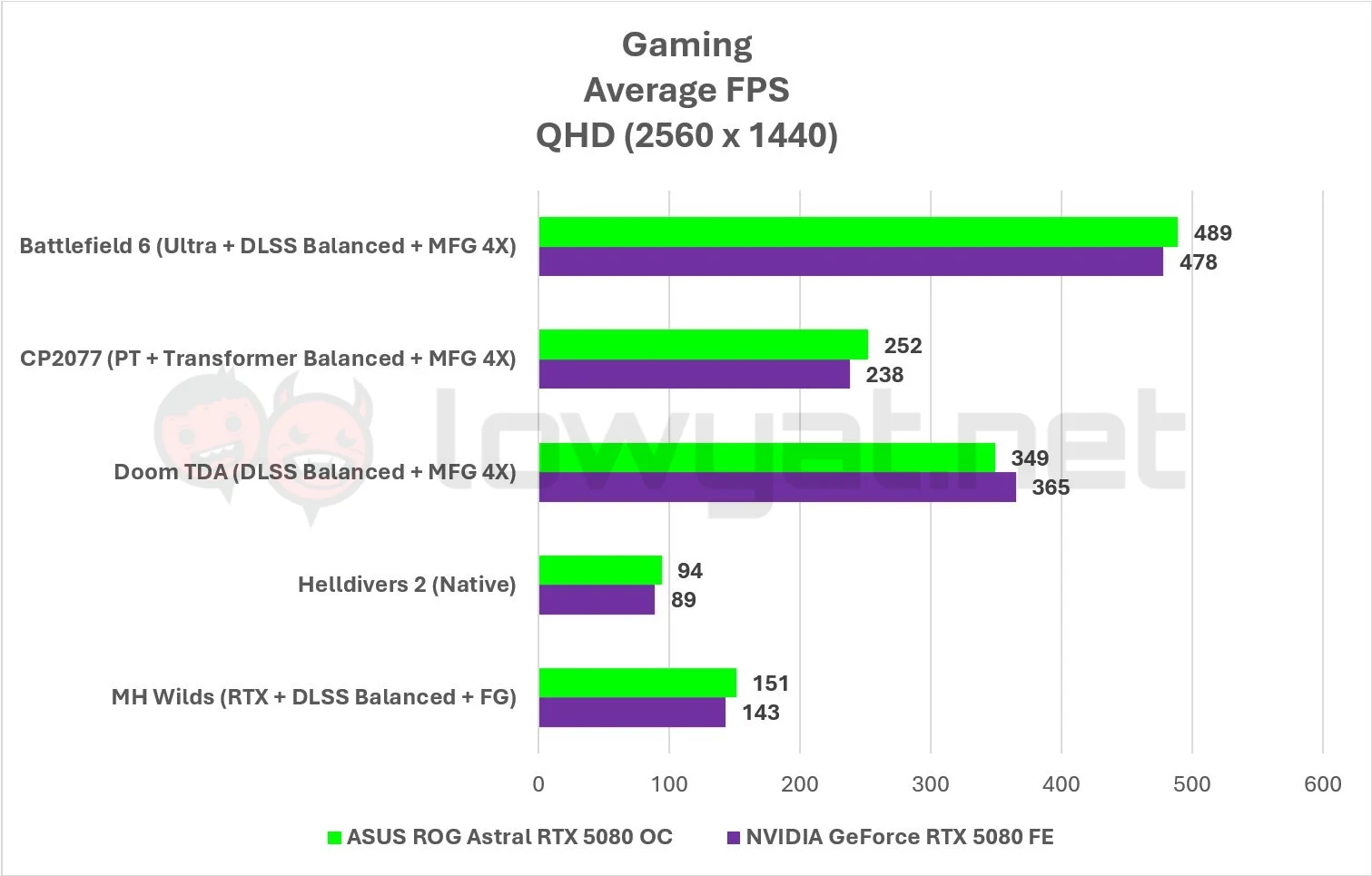
The results of the Astral RTX 5080 are not surprising. At the end of the day, this is still based on NVIDIA’s second most powerful Blackwell GPU, so when paired side by side with the RTX 5080 FE, the difference in performance isn’t exponential.
In most cases, the Astral RTX 5080 pulls ahead of the RTX 5080 FE, particularly in the synthetic benchmarks. In gaming, it sometimes loses out by 10 to 20 frames on average, but it’s still performing within the same average frame range.
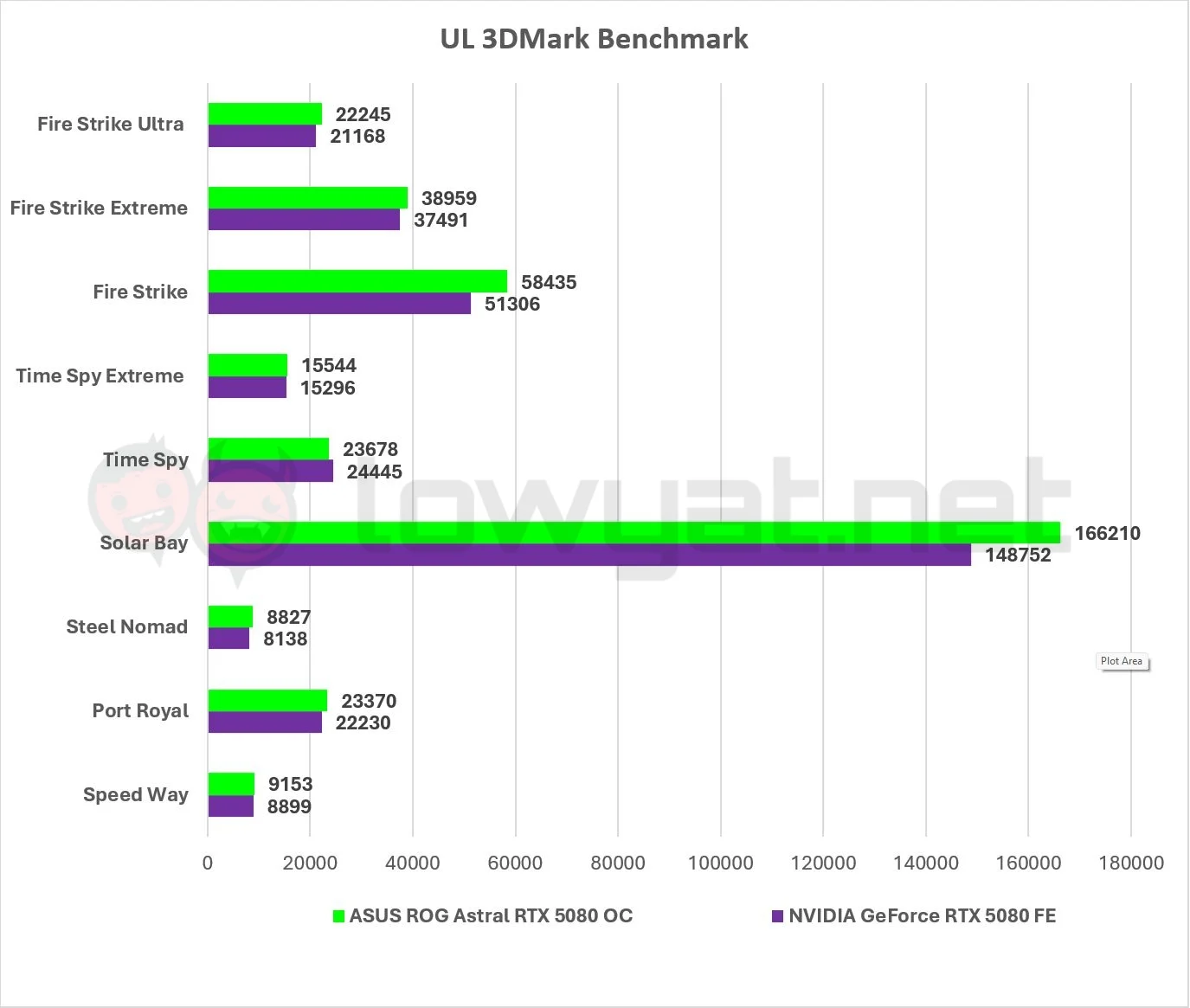
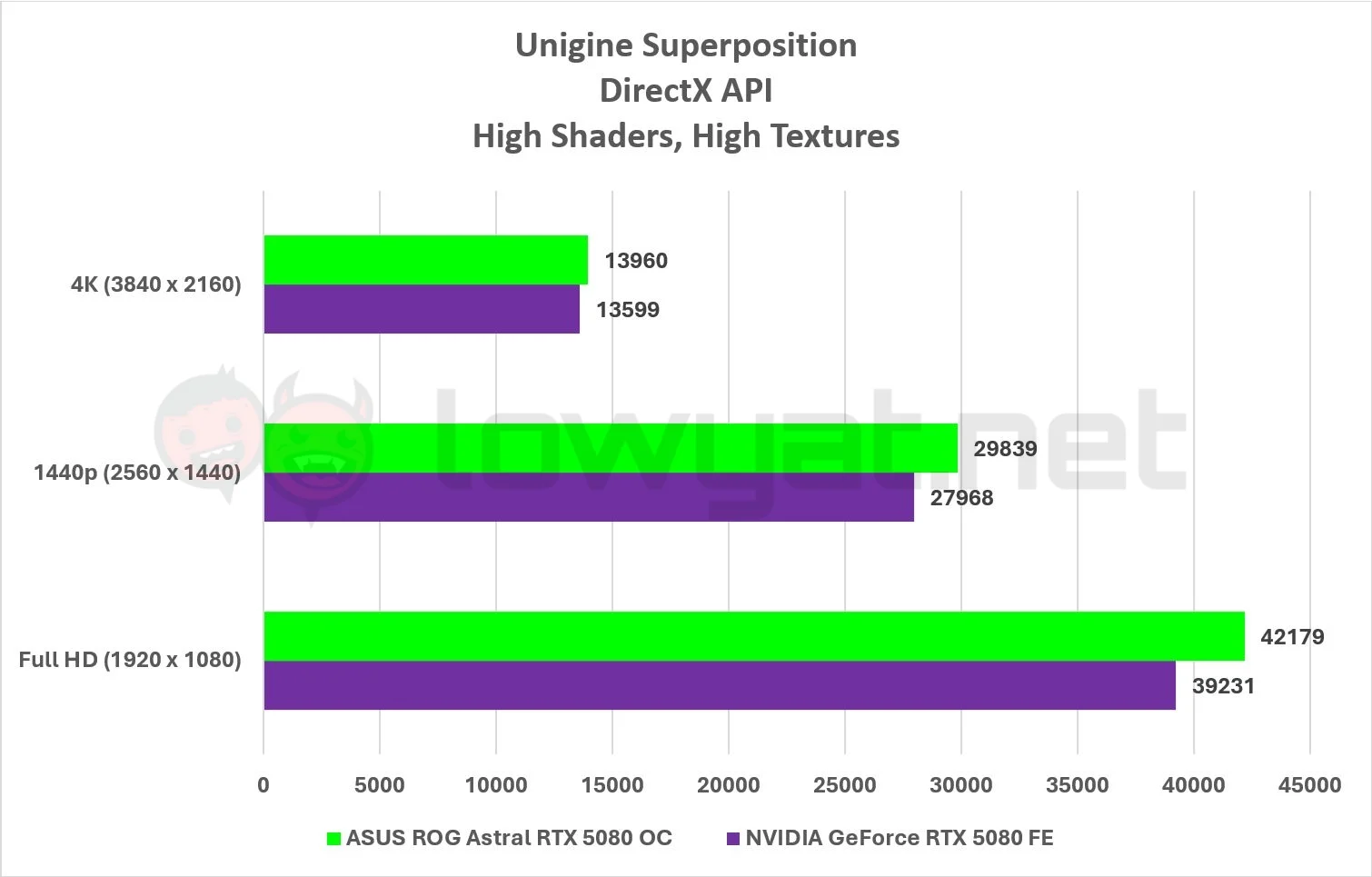
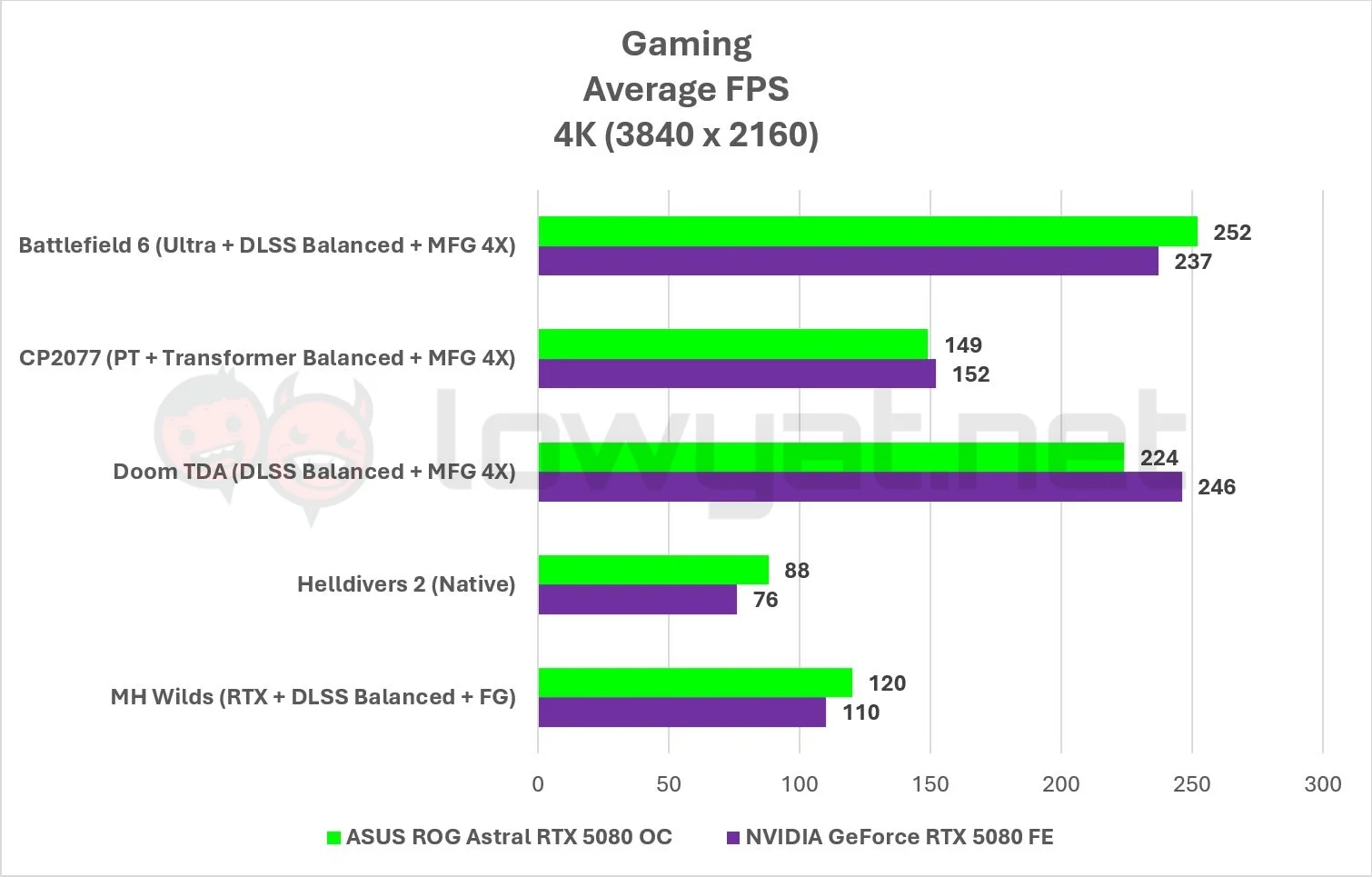
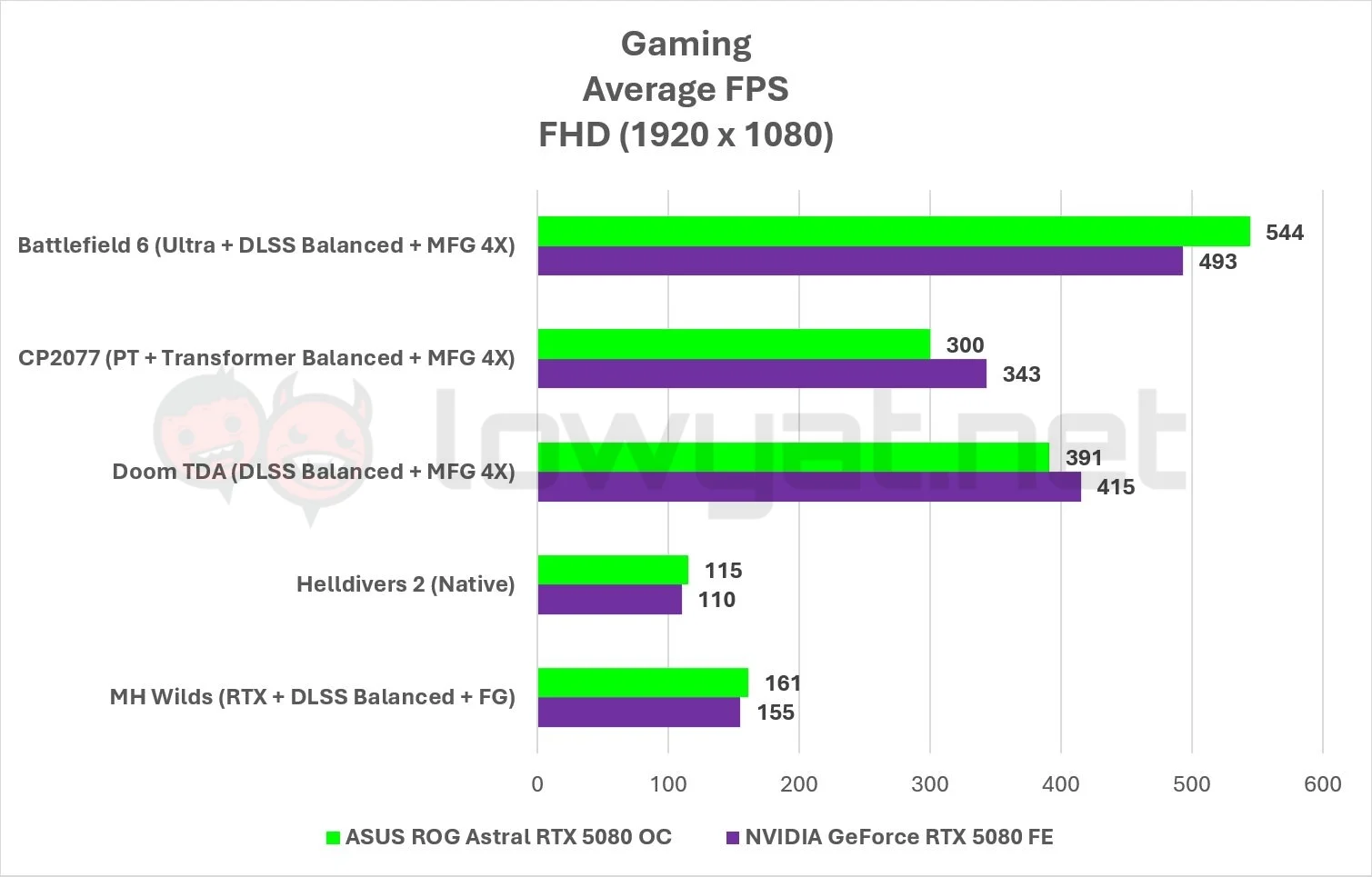
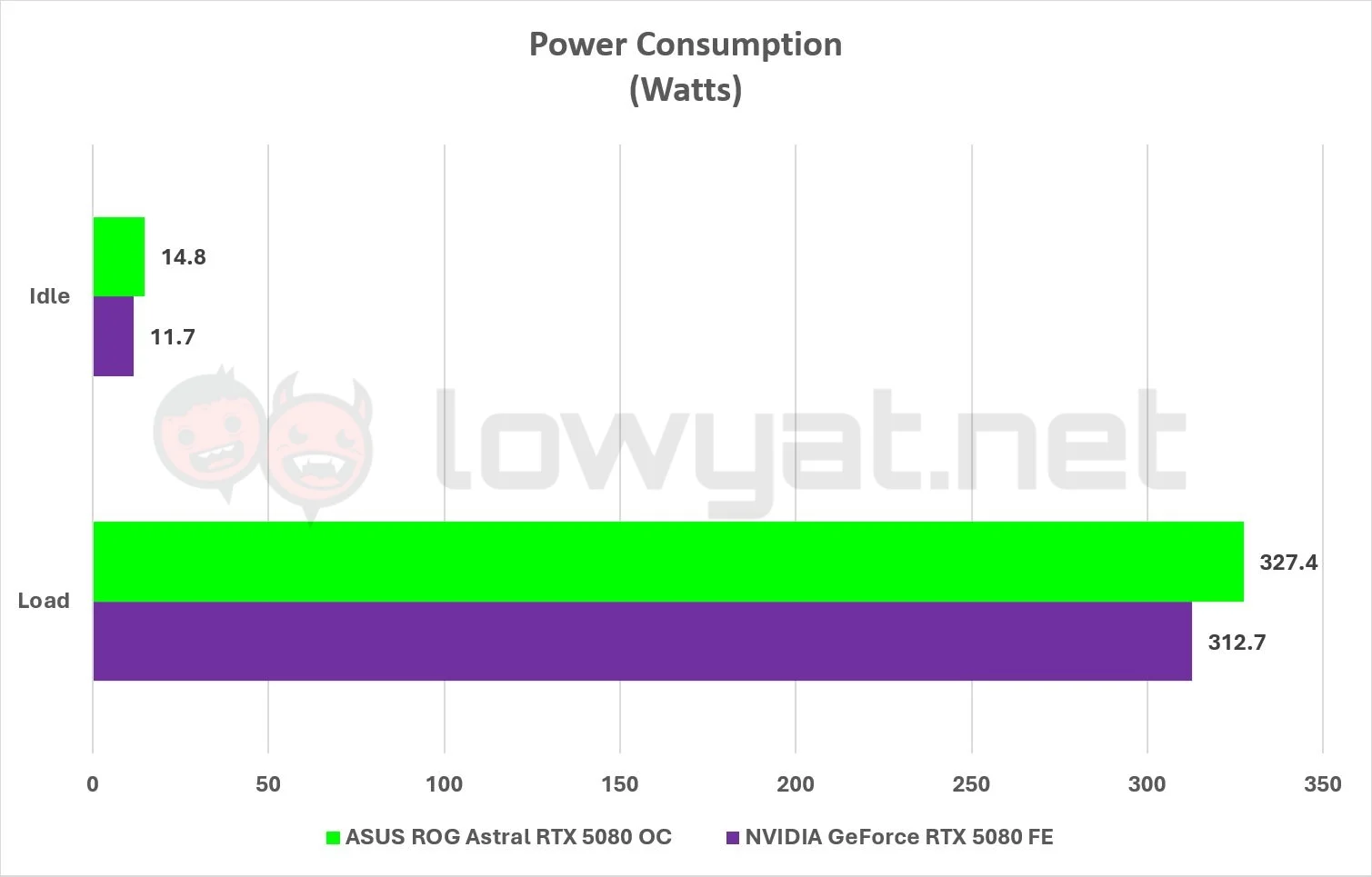
As for the power consumption and temperatures, the Astral RTX 5080 surprises me, showing that it’s not really pulling more power than the RTX 5080 FE; given the prowess and size of it, I expected ASUS to have tweaked it to draw more electricity from the wall to eke out that little more performance. Clearly, that’s not the case.
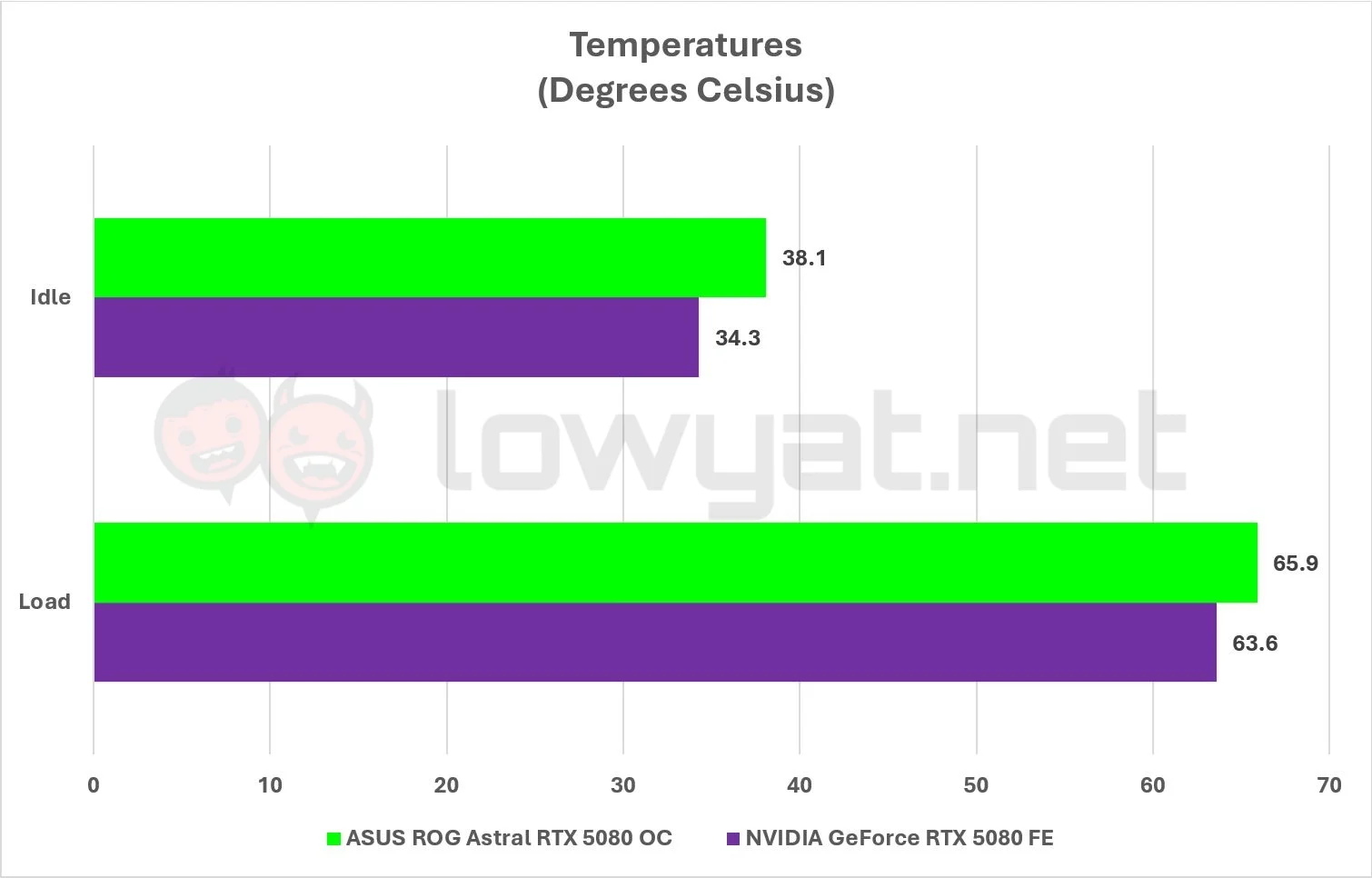
The upside of all that metal and fans stuck on top of the GPU core certainly keeps the GPU cool. While running at full whack, its peak temperature never really broke past the 66°C barrier. That being said, it feels like a double-edged sword, at least in terms of design: the RTX 5080 FE reached similar temperatures, but with a thinner frame and the use of a Double Flowthrough design, it does raise the question of excess and opulence on ASUS’ part.
Conclusion
At RM8,279 for the white edition of the ASUS ROG Astral RTX 5080, it is certainly one of the more expensive RTX 5080s that I’ve tested. More than just the performance, it’s obvious where the extra RM2,000 average of the GPU is going: the aesthetics.
The ROG Astral RTX 5080 White Edition is, beyond a doubt, a pristine and pretty looking GPU to look at, and I would imagine that anyone purchasing this card is going to ensure two things: First, it’s most likely going to be an all-white build. Second, they’re most definitely going to be perching their PC on top of their desk, because they’d want everyone to see just how pretty the card is.
If you do get this card, though, I do highly recommend that you invest in an anti-sag bracket of sorts: for a card this large and pretty, it’s also leaning on the heavy side.
Photography by John Law.