
Volvo Car Malaysia (VCM) has officially launched the updated EX90 in Malaysia, more than a year after the fully electric SUV was first introduced. The newer version, which was unveiled globally in September 2025, brings several powertrain and technology improvements while also transitioning from fully imported (CBU) to locally assembled (CKD) production.
There are few visual changes for the updated EX90, with Volvo retaining the SUV’s overall design almost entirely. The flagship model continues to feature the pixel-style Thor’s Hammer daytime running lights that open up to reveal the main headlamps, along with a grille-less front end bearing the Iron Mark.
At the rear, the EX90 retains its C-shaped taillights and accompanying light bar, while semi-hidden door handles continue to contribute to its clean exterior appearance. The SUV remains a seven-seater with a 2-3-2 seating layout, although Volvo says a six-seat 2-2-2 configuration will be introduced at a later date. New for 2026 is the Mulberry Red exterior colour, joining Onyx Black, Sand Dune, Crystal White and Vapour Grey.
Interior
The cabin also carries over much of the pre-update model’s minimalist design, centred around a portrait-format 14.5-inch touchscreen running an infotainment system with Google built-in. This provides access to Google Assistant, Google Maps and the Google Play Store without requiring a connected smartphone.
Android Auto and Apple CarPlay are supported as well, while the driver continues to get a nine-inch digital instrument cluster. The dashboard retains its full-width-look air vents and largely button-less layout, with touch controls on the steering wheel and a rotary media control dial on the centre console.
For 2026, the interior is offered in two Nappa leather themes: Charcoal with Light Ash décor, and Cardamom with Brown Ash décor. This represents a change from the CBU model, which was offered with Nordico leather in Charcoal or Cardamom paired with Birch Wood décor.


800-Volt System
The biggest changes are found under the skin. The locally assembled EX90 continues to use the Twin Motor Performance powertrain, with one electric motor driving each axle, but its electrical architecture has been upgraded from 400 volts to 800 volts.
As a result, combined output has increased to 680 PS (671 hp or 500 kW), up from 517 PS (510 hp or 380 kW) in the outgoing model. Peak torque, however, is slightly lower at 870 Nm, a 40 Nm reduction compared with the previous 910 Nm.
The updated EX90 can accelerate from 0-100 km/h in 4.2 seconds, improving on the outgoing model’s 4.9-second time. Top speed remains electronically limited to 180 km/h in keeping with Volvo’s safety-focused philosophy, while the improved acceleration is attributed not only to the higher output but also to reduced wiring and weight enabled by the 800-volt architecture.
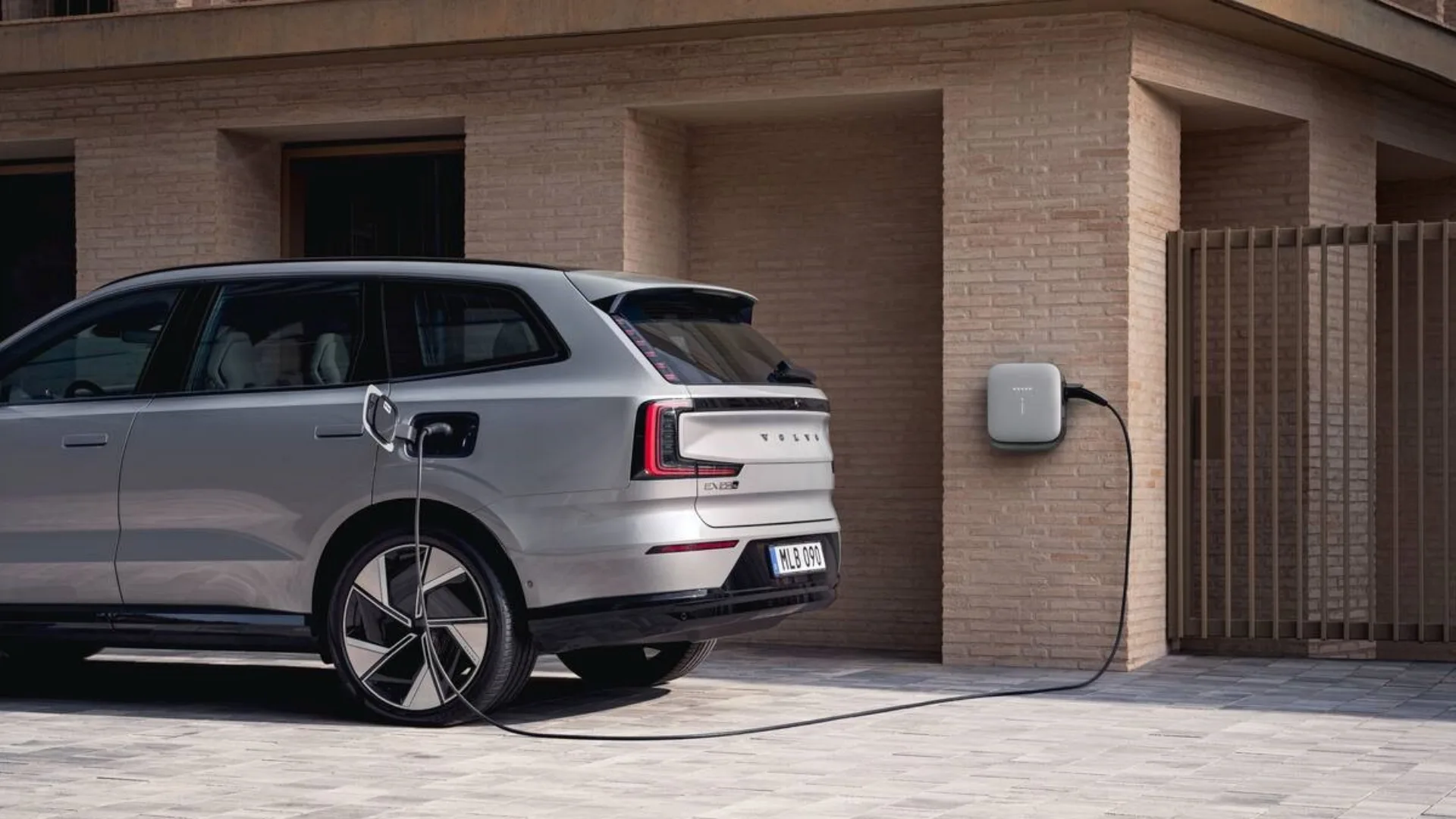
Smaller Battery, Faster Charging
The EX90 continues to use a nickel cobalt manganese (NCM) battery, although its capacity has been reduced slightly. The new pack has a gross capacity of 106 kWh and 103 kWh usable, compared with 111 kWh gross and 107 kWh usable for the previous CBU model.
This results in a small reduction in driving range, with the updated EX90 rated for up to 617 km under the WLTP standard versus 623 km previously. The trade-off is significantly faster DC charging.
With support for up to 350 kW DC charging, compared with 250 kW previously, a 10-80% charge now takes 22 minutes instead of 30 minutes. Volvo also says 250 km of range can be added in just 10 minutes, compared with 180 km previously. AC charging, on the other hand, remains at 11 kW, with a full 0-100% charge taking around 10 hours.

More Computing Power For Safety And AI
The updated EX90 also inherits the core computer used in Volvo’s ES90, featuring dual Nvidia Drive AGX Orin chips capable of 500 TOPS (trillion operations per second) of computing performance. The system is used for artificial intelligence (AI) functions as well as various safety and driver assistance features.
Volvo says some of these functions can be improved through over-the-air (OTA) software updates, allowing the vehicle’s capabilities to evolve after it has been delivered to customers.
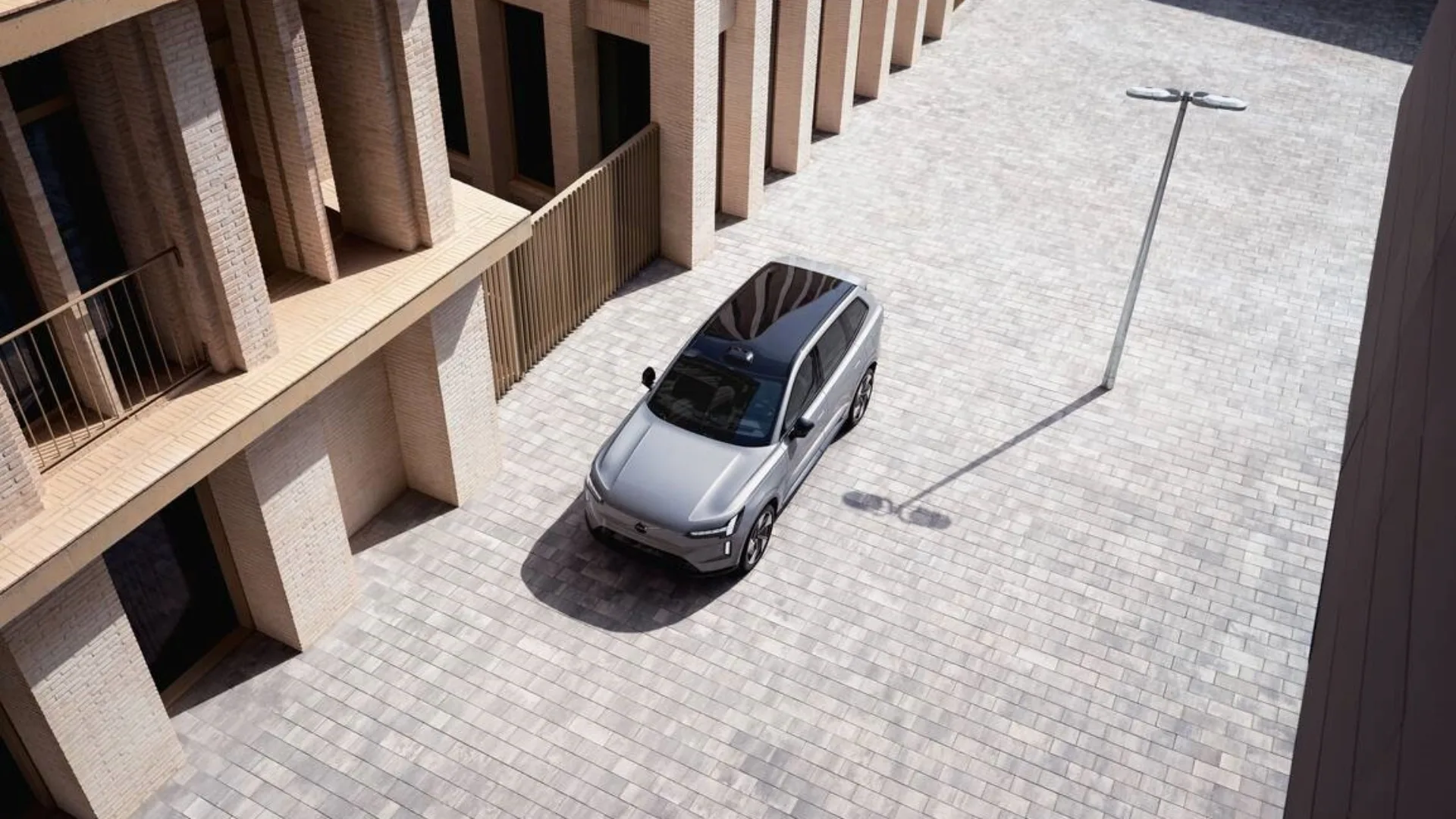
Despite the technology upgrade, the CKD EX90 loses the roof-mounted LiDAR sensor found on the previous model. Its driver assistance suite nevertheless continues to include Pilot Assist, blind spot monitoring with steering assist, autonomous emergency braking, intersection auto brake, lane keeping assist, rear cross traffic alert, a 360-degree camera and Park Pilot Assist.
Other Equipment
The EX90 comes with a 25-speaker Bowers and Wilkins sound system, head-up display and Digital Key Plus, alongside key card and key tag support. Notably, there is no conventional key fob supplied with the new model.
Other standard equipment includes 21-inch eight-spoke aero wheels, a tyre pressure monitoring system, active air suspension, powered front seats with ventilation and massage functions, one-pedal driving, a powered tailgate, an electrochromic roof and four-zone climate control with vents serving all three rows. Meanwhile, safety equipment comprises dual front, side, inner-side, curtain and driver’s knee airbags, as well as ISOFIX mounting points, an integrated booster cushion and an interior radar system for occupant sensing.

Starts From RM428,888
The 2026 Volvo EX90 is locally assembled in Malaysia, marking a shift from the CBU model that was previously imported from China. The move to CKD production also coincides with a RM14,000 reduction in its asking price.
The updated seven-seat Volvo EX90 Twin Motor Performance is priced at RM428,888 on the road without insurance. The first 100 customers will receive a RM25,000 cash rebate and a complimentary Volvo wallbox worth RM3,990. Each purchase also comes with a five-year/unlimited-mileage vehicle warranty and an eight-year/160,000-km battery warranty.
(Source: Volvo Malaysia [official website] [Facebook])