Intel has seemingly confirmed that its upcoming Nova Lake-P Series of processors will be powered by its Xe3p GPU architecture. To be precise, it will be the Xe3P-LPG variant, and this iGPU will only be made available in select CPU models.
The information was first reported by Phoronix, who discovered that the blue chipmaker had released patches for Xe3P-LPG graphics support. This release also comes after the company releases patches that build atop the existing Xe3P-LPM and Xe3P-LPD supports.
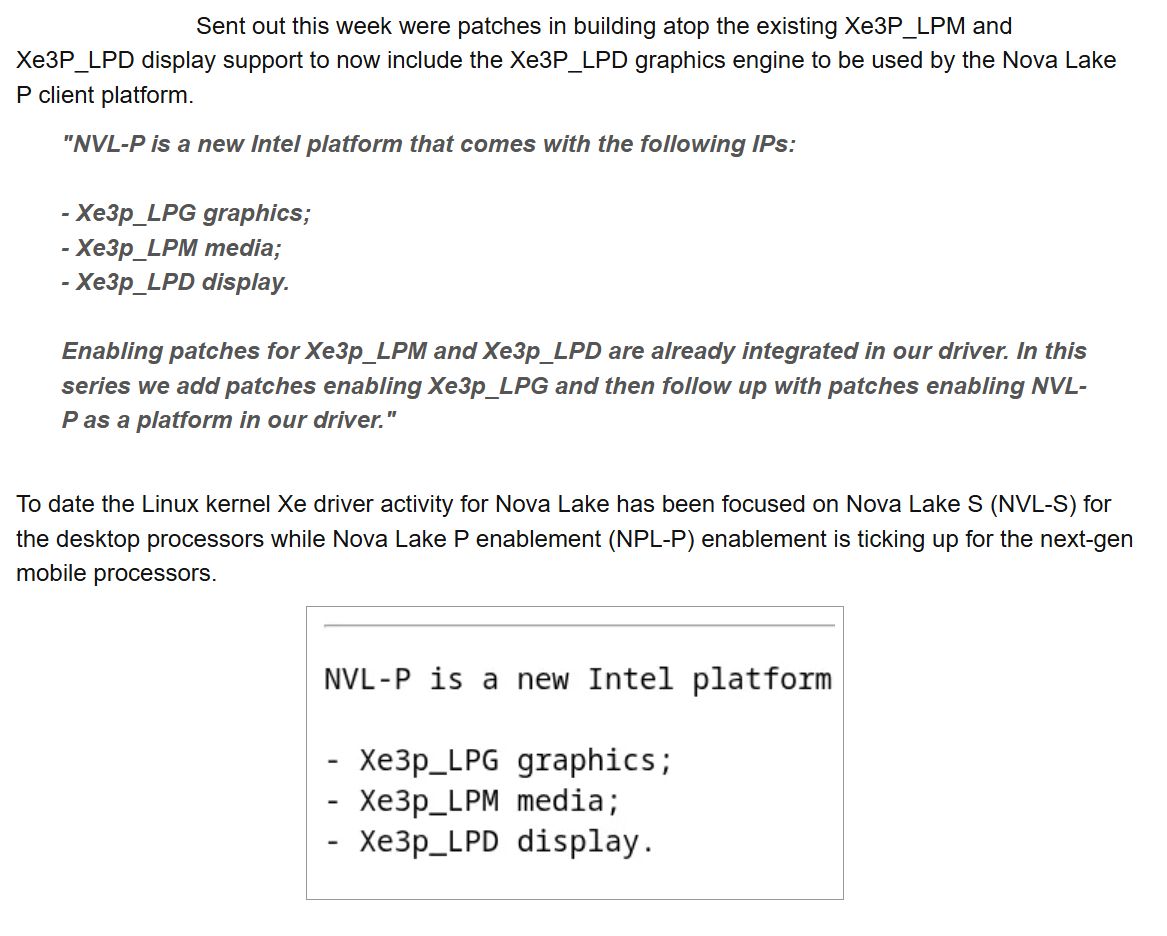
Phoronix also explains that, to date, Linux kernel Xe drivers have primarily been focused on Nova Lake-S, which is for desktop processors, while Nova Lake-P is technically for laptops.
Intel is expected to launch its Core Ultra 400 series CPU by the end of this year, which is codenamed Nova Lake. The lineup is expected to launch with a mix of SKUs running on both Xe3P and Xe3 iGPUs, which raises the question of whether the launch is for its desktop variant or if it is including laptop SKUs, although the latter seems likely, given how recent Panther Lake launched.
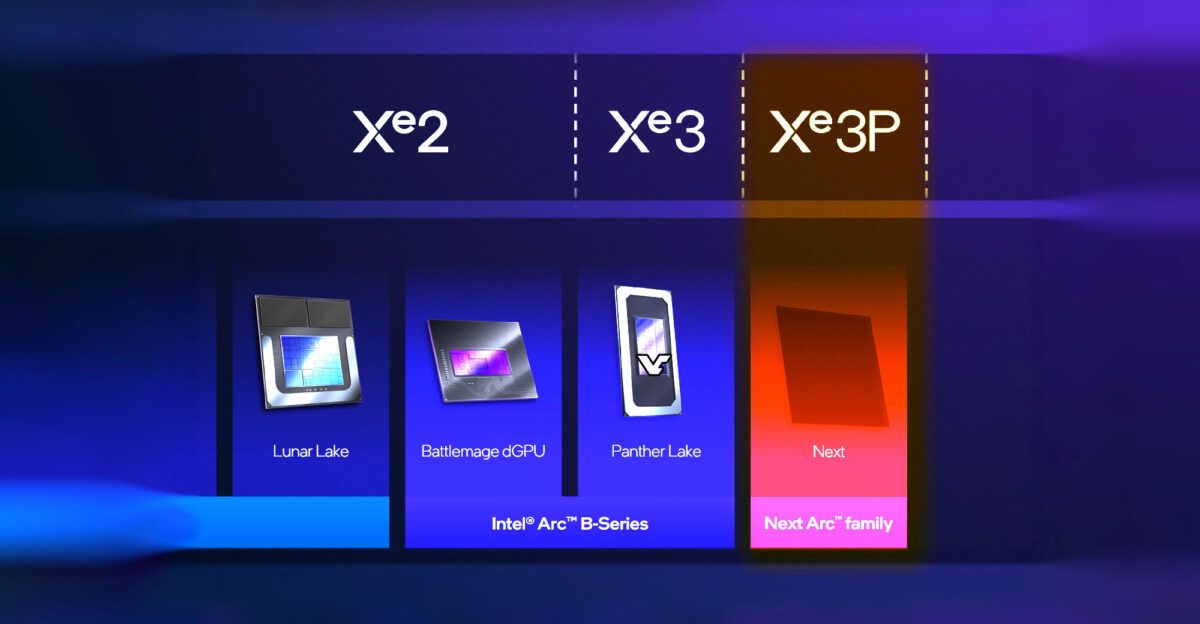
That said, it wouldn’t surprise us if Intel were to continue the trend of migrating some of its laptop CPU technology over to its desktop segment. Just look at Arrow Lake: the 15th Gen desktop variant finally shipped out with Xe cores, albeit being first generation ones.
Intel’s Cadence Summarised
Intel, much like its red rival, AMD, can be really confusing, and usually for but a want of a word. They have tried to simplify the process, bless them, but as it stands right now, there’s not much difference. By comparison, the naming convention for its ARC integrated graphics, or iGPUs, has been far simpler and easier to follow.
The ARC Series basically follows the Alphabet system: A is for Alchemist, B is for Battlemage – the generation that we are currently on – C is for Celestial, and D is Druid. That’s all the names we know so far because that’s as far as Intel has gone with it.
Again, the naming convention for its CPUs is more confusing, particularly because it is divided into two categories: desktop and laptop. Worse, the technology that governs their process also tends to overlap.
To use a more recent example, Meteor Lake first came out in 2023 and marked the first time Intel used its self-named Intel 7 process. Lunar Lake came onto the scene the year after, introducing a vastly improved CPU and integrated GPU architecture, albeit being partially constructed using TSMC’s N3B and N5P process nodes.
Where the overlap between desktop and laptop begins is when Intel announces its less-than-premium tier SKUs for laptops; Raptor Lake, while originally launched in 2022, began appearing in laptop SKUs, primarily in its refreshed form, and typically for high-octane gaming laptops that also included equally powerful laptops.
Getting back to Intel’s integrated GPU architecture, the current Xe3 isn’t actually third generation ARC, but rather, it’s an improved version of the current Battlemage GPU architecture. Xe3P is, based on the chipmaker’s roadmap, expected to be based on the next generation “Celestial” architecture, otherwise known as the ARC C-Series.
(Source: Videocardz, Phoronix)