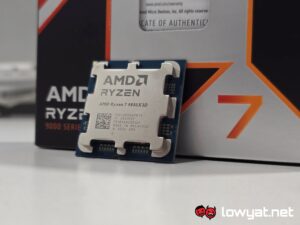
AMD isn’t trying to break new ground or make airs with the Ryzen 7 9850X3D. In all honesty, it really is what the red chipmaker is portraying it to be: a simple update with slightly better performance than the currently existing 9800X3D, and perhaps a cheaper alternative to the 9950X3D.
To that end, there isn’t a whole lot to unpack with this review and as such, I’ll get straight into it.
Specifications And Design
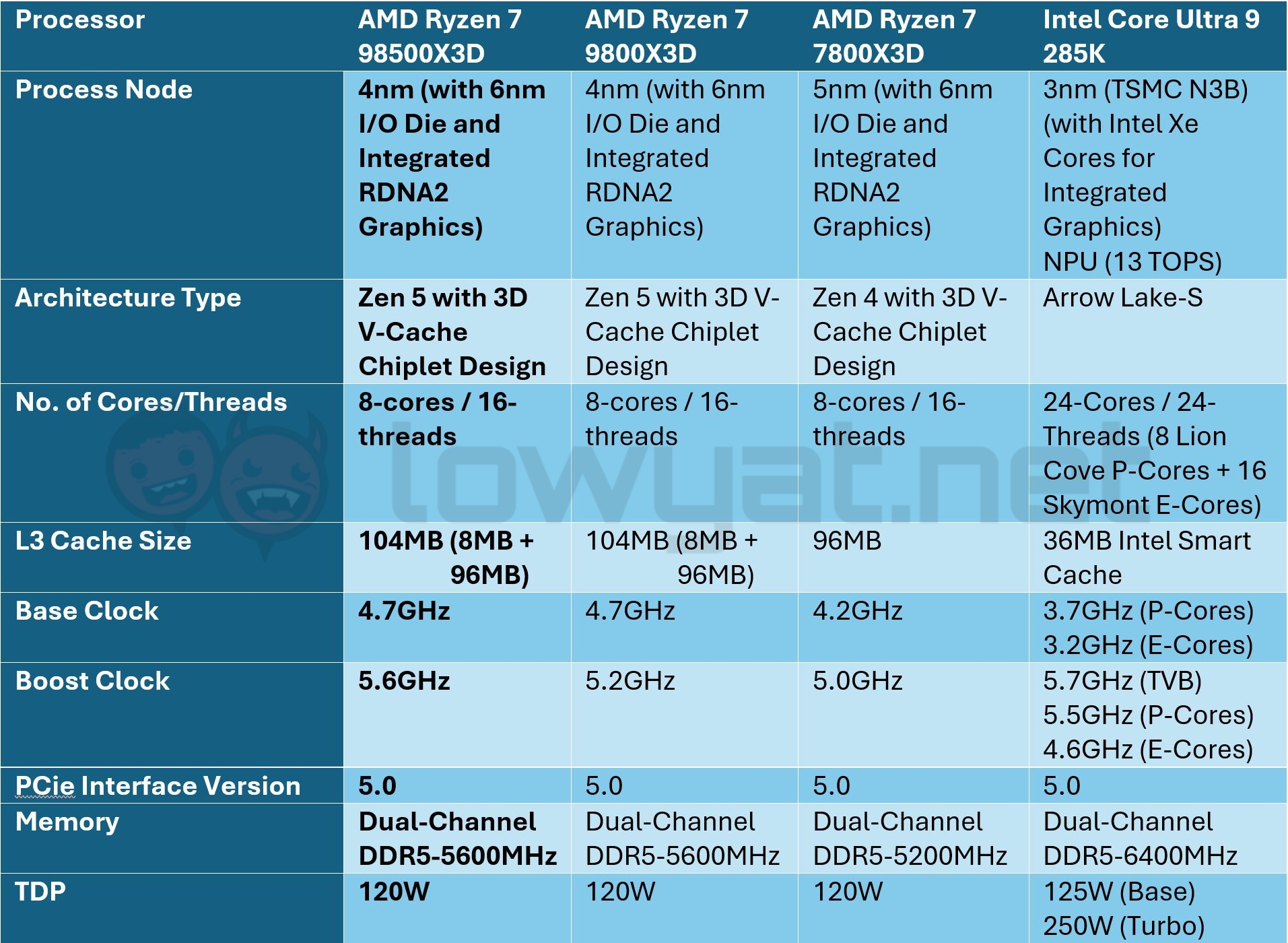
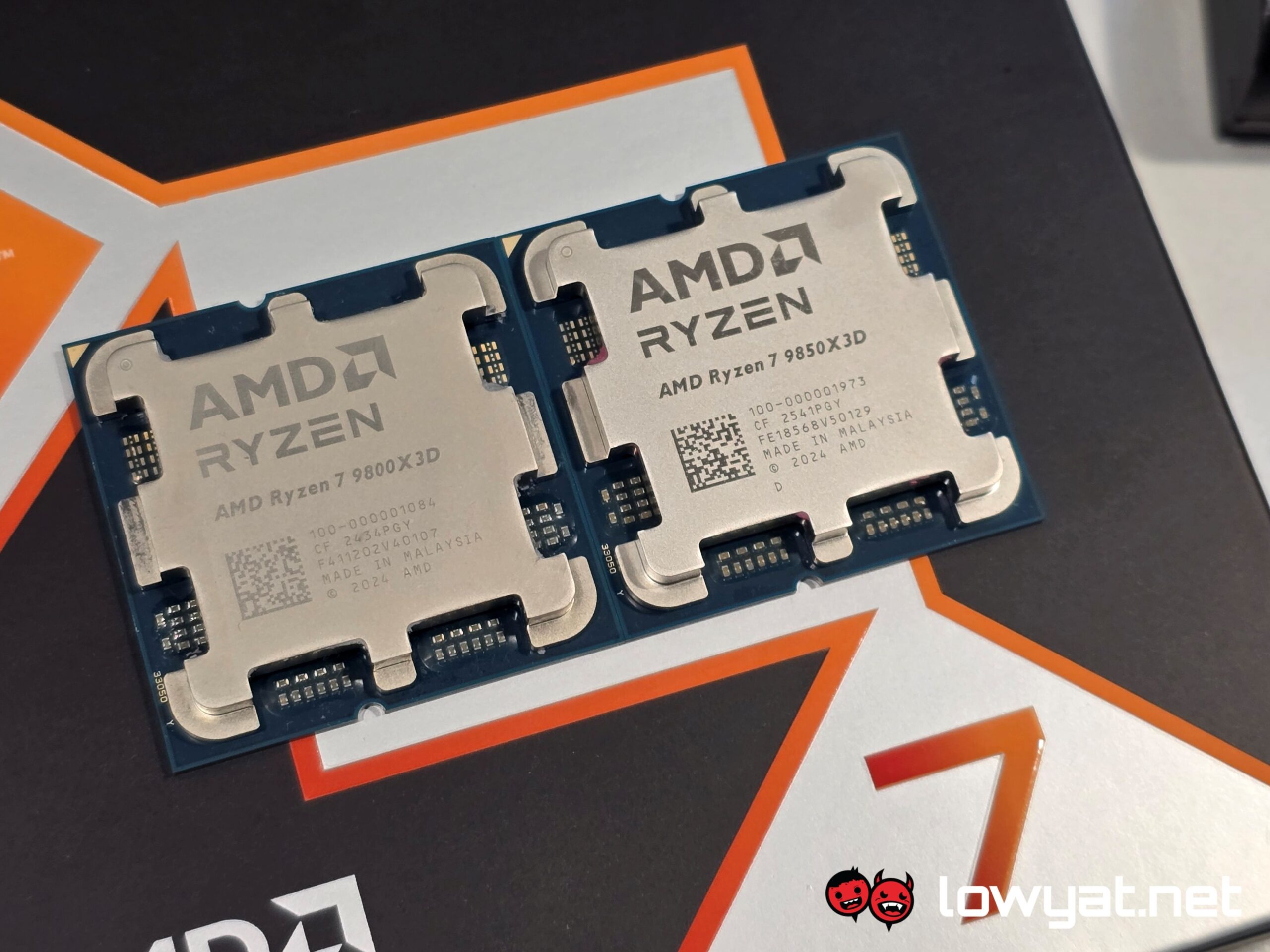
Like the 9800X3D that launched back in 2024, the 9850X3D is virtually identical to the best-selling 3D V-Cache CPU. The only difference here is the obvious boost clock, which is 400MHz higher at 5.6GHz.
Besides that, it’s the same 4nm Zen5 architecture with the same 6nm I/O die, the same 104MB L3 cache, and the same 8-core, 16-thread layout and configuration. If nothing else, the 9850X3D feels more of a refresh than a full-on, brand new SKU, and the only model that AMD seems to be releasing for the Ryzen 9000 Series at current.
Testbench
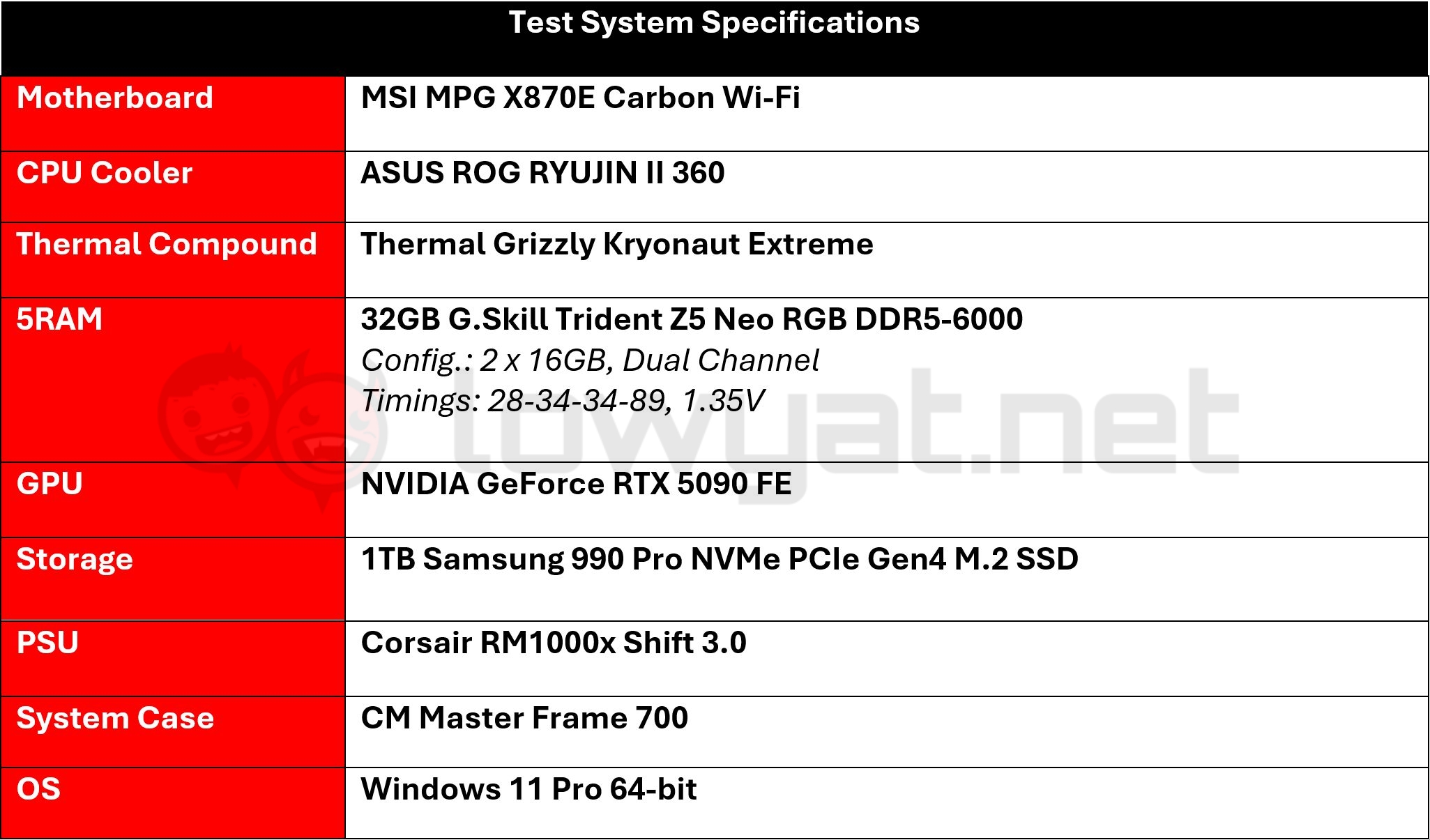
As AMD always does, the brand has provided a kit to conduct my review of the 9850X3D. Basically, the motherboard is different, but the memory kit and everything else remain the same.
For comparison, I’m benchmarking the 9850X3D against the 9950X and the 9800X3D. I would throw in the 9950X3D, but as of this review, I am no longer in possession of that CPU.
Benchmark, Temperature, And Power Consumption
As to how big of a performance jump from the 9800X3D to the 9850X3D is, the answer is…not by a whole lot, honestly. On a synthetic level, it has the 9800X3D beat in certain areas, and on some very obvious grounds here.
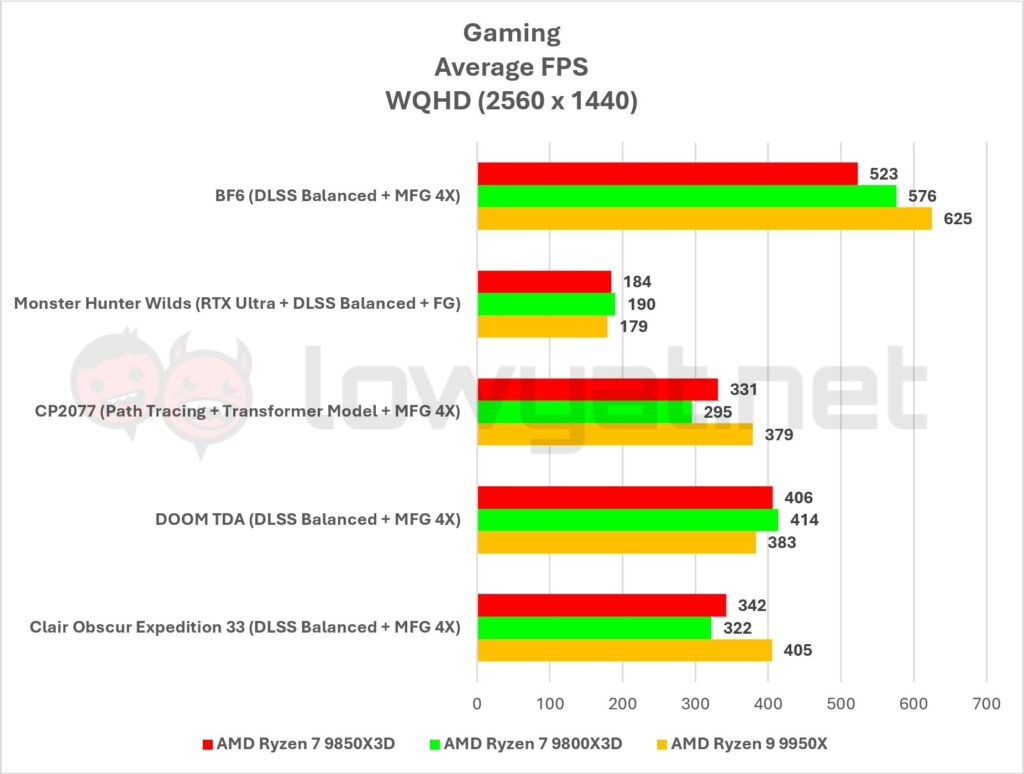
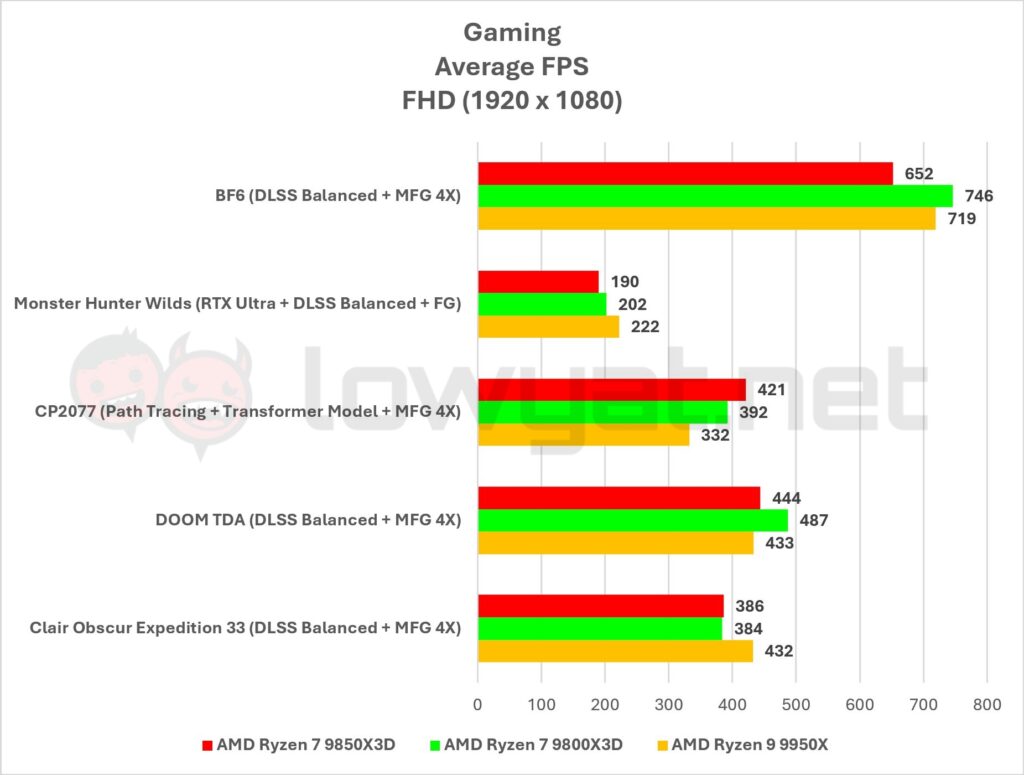
In other areas, the 9850X3D seems to be performing almost the same as the 9800X3D, particularly in gaming. In Monster Hunter Wilds, it actually doesn’t hit the same average frames as its sibling, but the fallback isn’t as bad that I would dismiss the CPU’s existence. No, seriously, getting more than 100 fps with the CPU and with an RTX 5090? I’m definitely complaining.
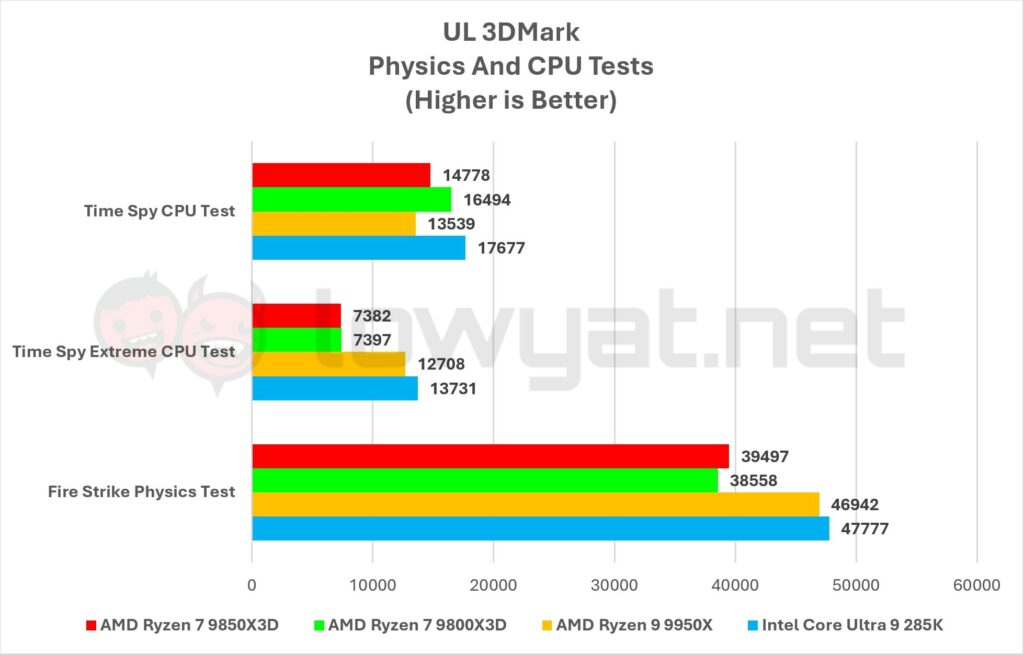
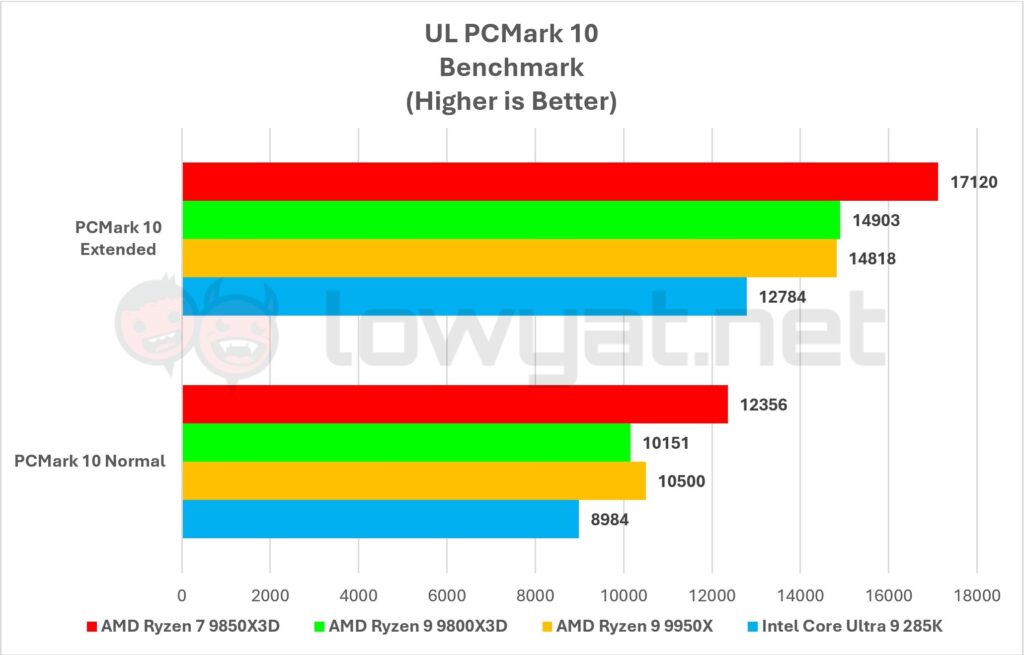
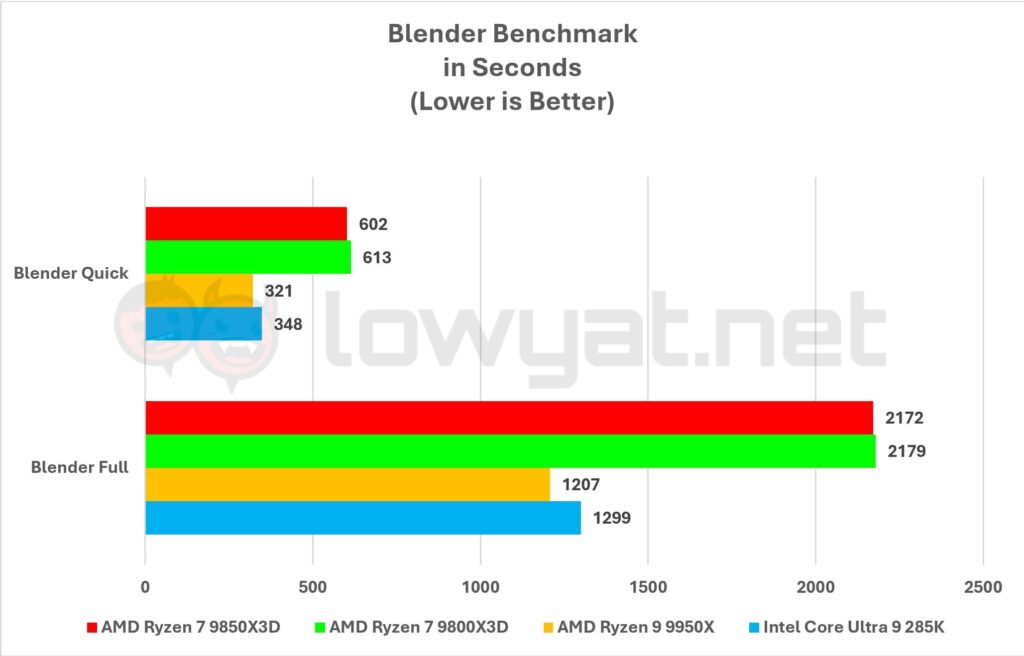
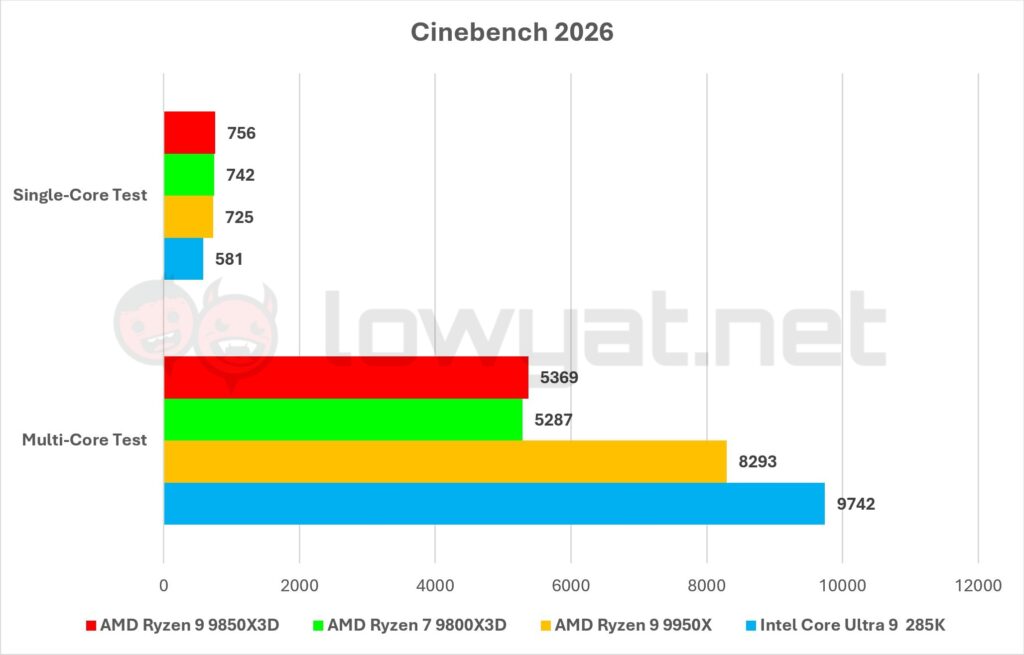
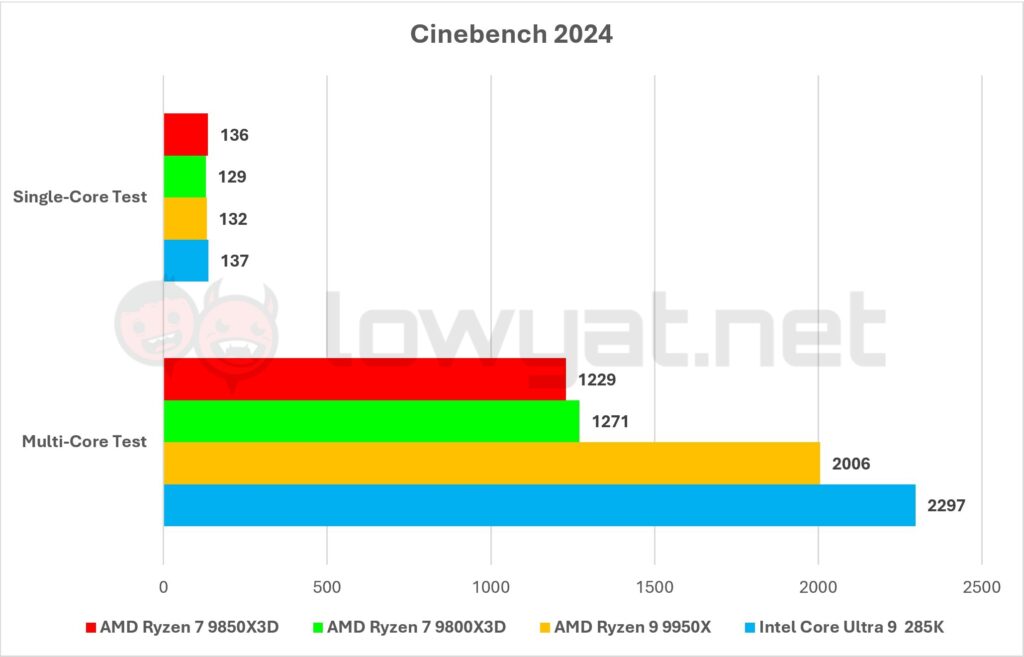
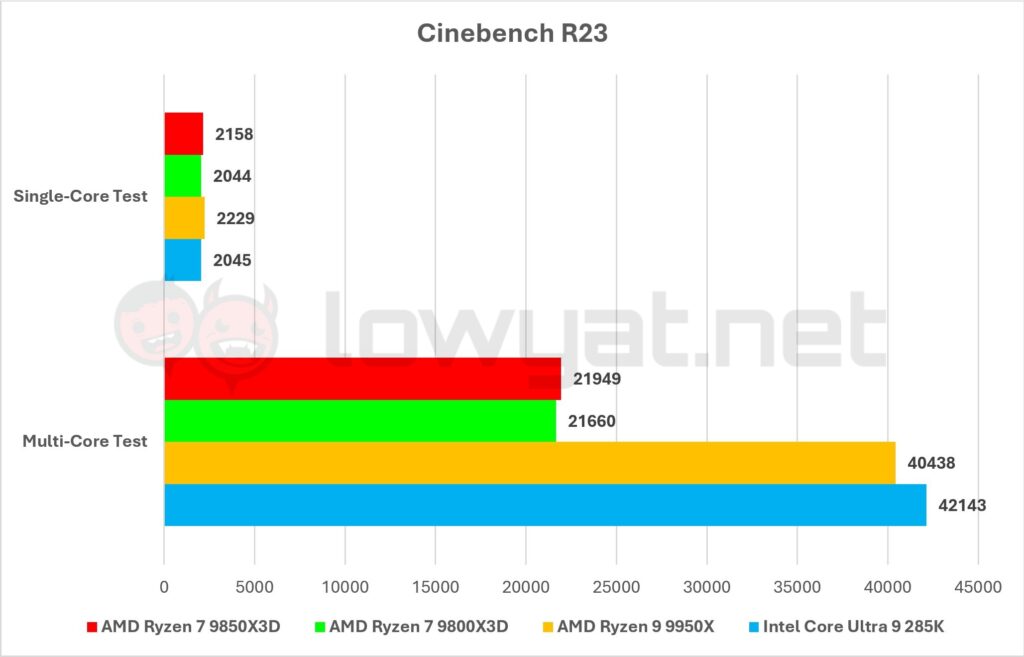
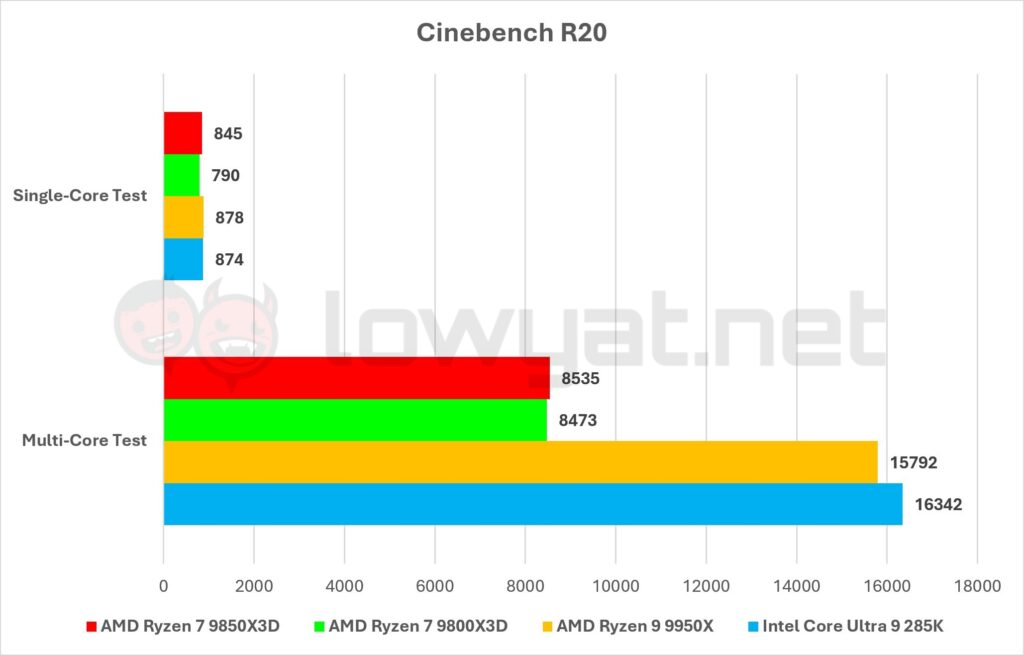
It’s the same story with Battlefield 6 and Expedition 33; having that slight bump in boost clocks isn’t helping it overtake the 9800X3D by strides, but from where I’m gaming from, seeing it maintain more than 200 fps, let alone 100 fps for that matter, is definitely still worth.
The one title the 9850X3D does outpace the 9800X3D, though, is in Cyberpunk 2077.
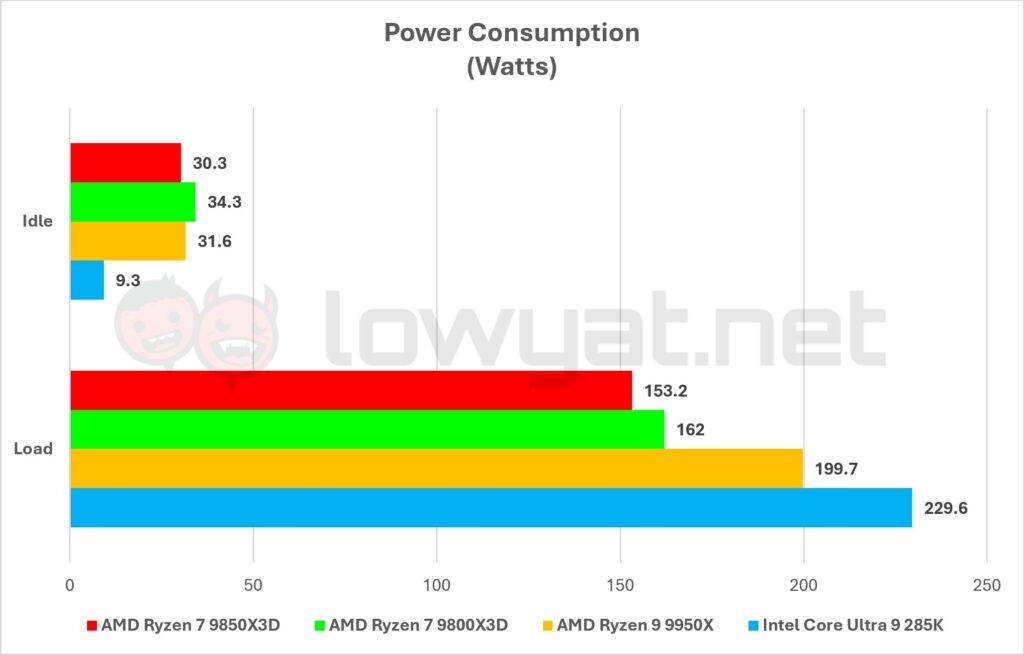
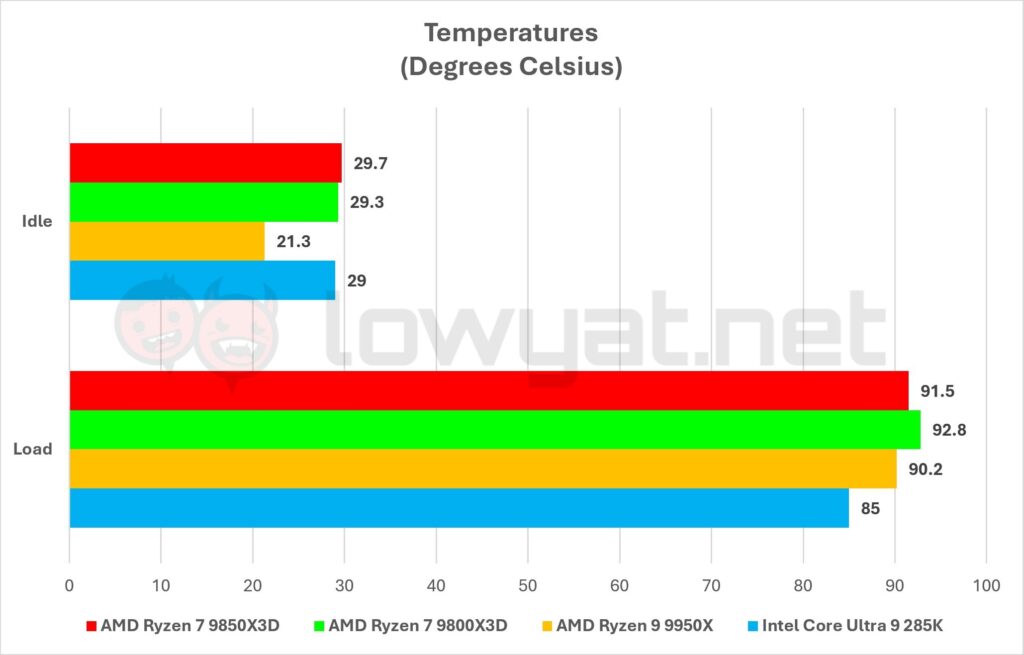
In terms of power consumption and temperature, the 9850X3D consumes less power than the 9800X3D, surprisingly, but it can run a heck of a lot hotter. The 91°C is the average peak temperature that it maintained, sure, but on occasion, it hit upwards of 93°C.
Conclusion
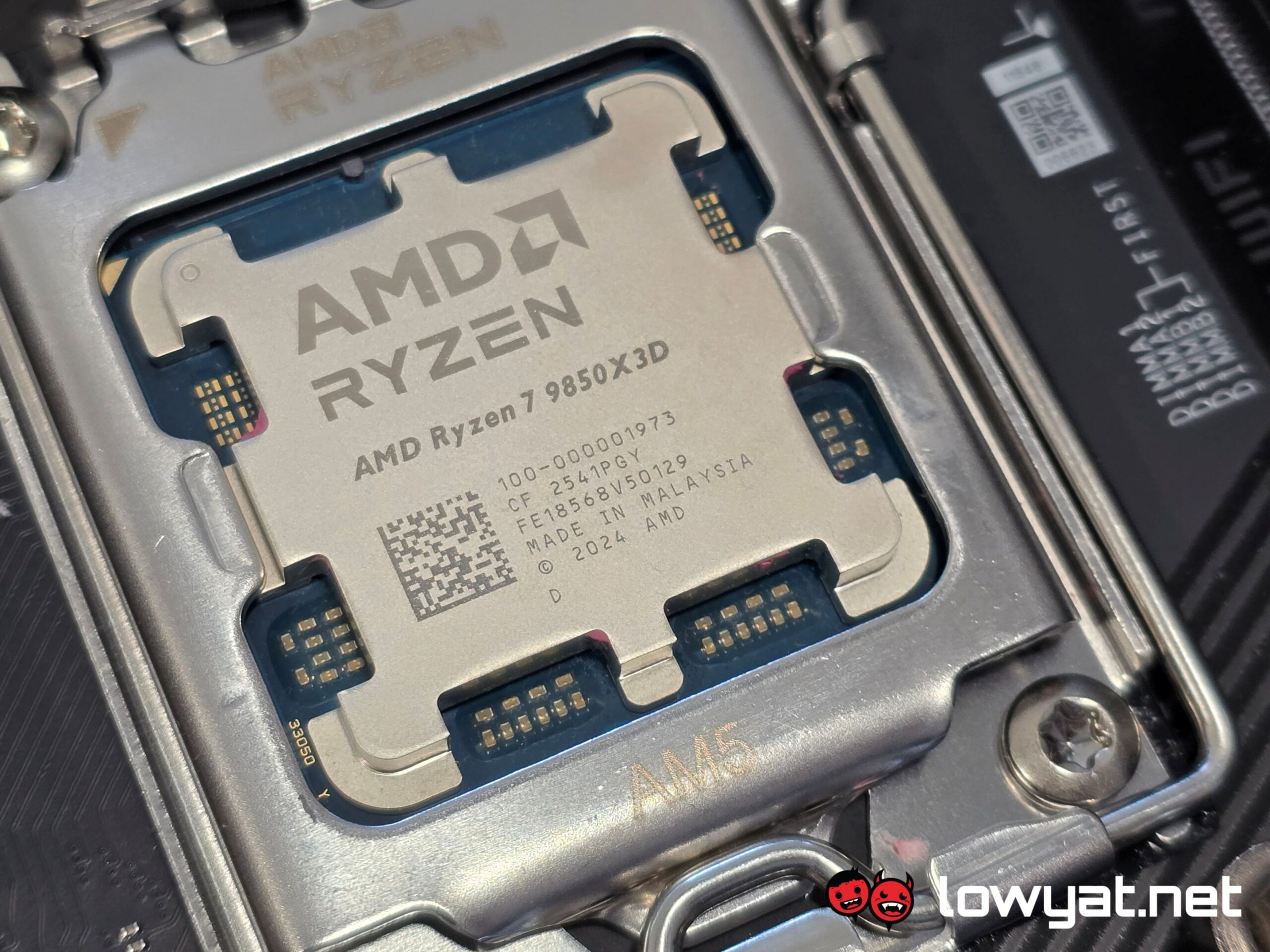
At US$499 (~RM1,953), the AMD Ryzen 7 9850X3D certainly gives off the vibe that it is a filler CPU, more than it is a full-fledge, game-changing product. AMD, if you’re reading this, this isn’t me complaining: the CPU is good, but it isn’t great.
Charging US$20 (~RM78) more than the price of a 9800X3D for a meagre 400MHz isn’t unreasonable, I suppose. Would I recommend it? Yes, assuming you’re coming from the Ryzen 5000 or 7000 series and you’re looking to modernise your rig, or you’re planning on jumping ship from your current Intel Core Ultra 200 series CPU. In which case, you’ve clearly got too much money, even in these trying times.
Between the 9850X3D and 9800X3D, though? I’d stick to the latter, given it’s still just as good, and cheaper too.