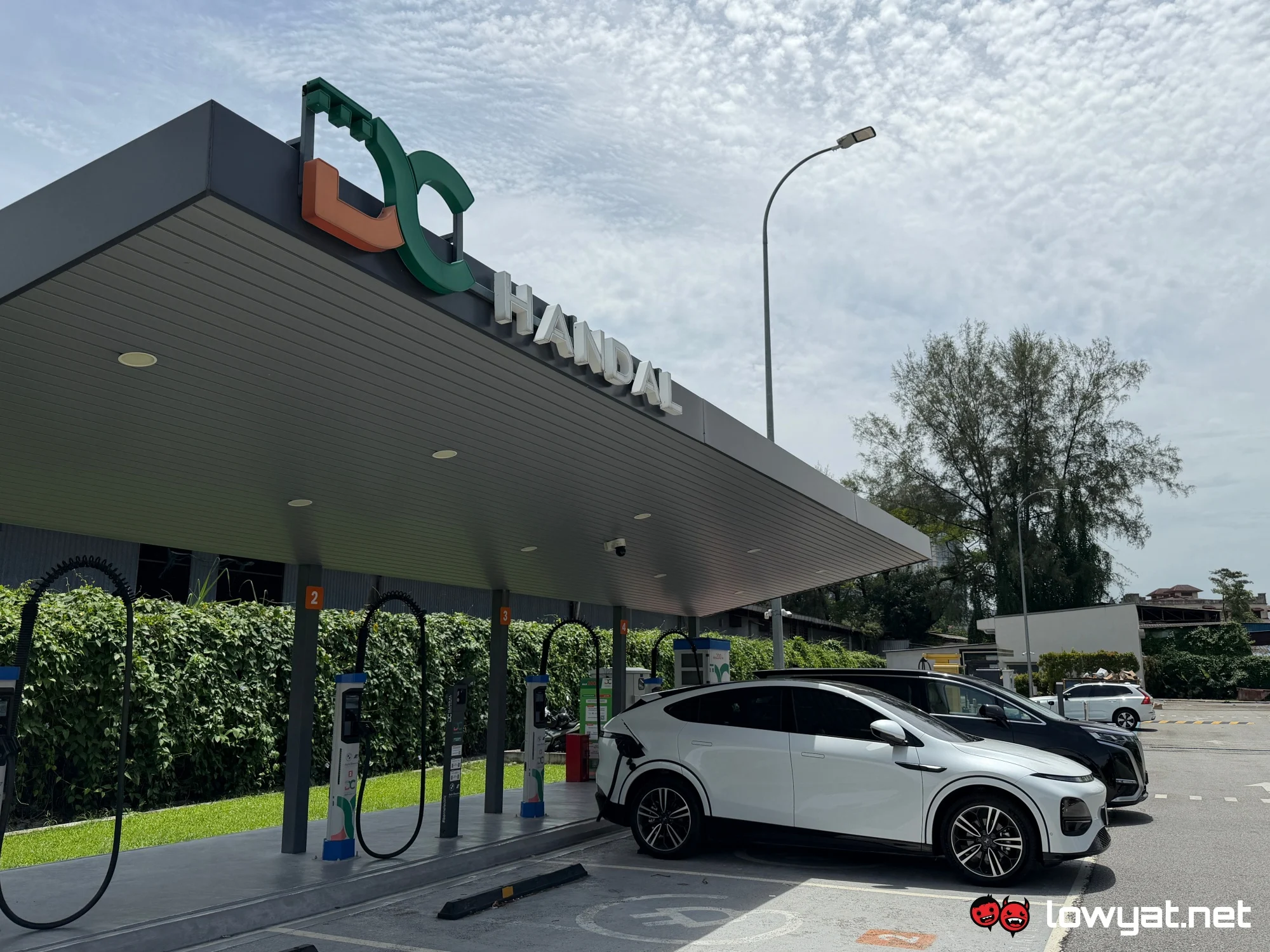
Malaysia now has a total of 6,416 public electric vehicle (EV) chargers installed nationwide, according to the Ministry of Investment, Trade and Industry (MITI). While deployment continues to grow, the figure remains well below the government’s earlier target of 10,000 public chargers by the end of 2025.
In a written parliamentary reply dated 8 July, MITI said the total comprises 2,143 DC fast chargers and 4,273 AC chargers as of the end of May 2026. The ministry was responding to a question from Kuala Pilah MP Datuk Adnan Abu Hassan on the government’s plans to expand EV adoption and improve the country’s charging infrastructure.
The latest figures also confirm that Malaysia remains short of its original National Energy Transition Roadmap (NETR) target of deploying 10,000 public EV charging stations by the end of 2025. Earlier this year, MITI minister Datuk Seri Johari Abdul Ghani had revealed that there were over 5,600 public EV charging units installed nationwide, while acknowledging that deployment was progressing slower than originally planned.

Measures Already Implemented To Speed Up Deployment
To address the shortage of public charging facilities, MITI said several measures have already been implemented to speed up infrastructure deployment. Among them is the Planning Guidelines for Electric Vehicle Charging Bays (GPP EVCB), which reduces the approval process for new charging bays to as little as 14 working days.
The ministry added that EV infrastructure development continues to be monitored through the National EV Task Force (NEVTF). Apart from increasing charger numbers, the task force is also focused on strengthening Malaysia’s local EV supply chain through collaborations involving local companies, vehicle manufacturers (OEMs), and global technology providers.
According to MITI, these efforts aim to accelerate technology transfer while boosting local production of high-value EV components such as batteries, electric drive motors, and Advanced Driver Assistance Systems (ADAS). It also reiterated that the government intends to maintain a balanced approach towards EV development, ensuring that policies not only support the local automotive industry but also deliver broader economic benefits.
Govt Targeting 30,000 Chargers By 2030
Speaking separately in the Dewan Rakyat yesterday, deputy MITI minister Sim Tze Tzin acknowledged that Malaysia still faces a shortage of public charging facilities. However, he stressed that the government remains committed to reaching its target of 30,000 public EV charging stations by 2030.
Sim said the government is working closely with Tenaga Nasional Berhad (TNB) to build more power substations capable of supporting the growing number of DC fast chargers, which require significantly higher power capacity than AC chargers. He also revealed that the government is developing targeted incentives for charge point operators to encourage faster infrastructure deployment.
The deputy MITI minister’s remarks came in as a parliamentary response to Datuk Dr Ku Abdul Rahman Ku Ismail, who proposed that EV companies play a more active role in expanding charging infrastructure. The Kubang Pasu MP also suggested integrating EV chargers into new residential developments, including apartments and condominiums, while urging the government to expand charging coverage beyond major urban centres into towns such as Sungai Petani and Alor Setar.
(Source: Bernama)