
X user and dataminer Huang 514613 recently posted on the platform that they had discovered a listing for a Lenovo Legion 7 gaming laptop fitted with the rumoured ARM-based NVIDIA N1X SoC. Well, that, and five other Lenovo laptops.
The post has since been removed (likely due to a request or DMCA strike from Lenovo), but as with all things on the internet, it never disappeared, and other sites have managed to take a screenshot of the post. As Videocardz puts it, Lenovo’s labelling methods for products are quite easy to read. The first letter of the string of letters after the model name denotes the platform: “A” is AMD, “I” is Intel, and “Q” is Qualcomm. Therefore, “N” stands for NVIDIA.
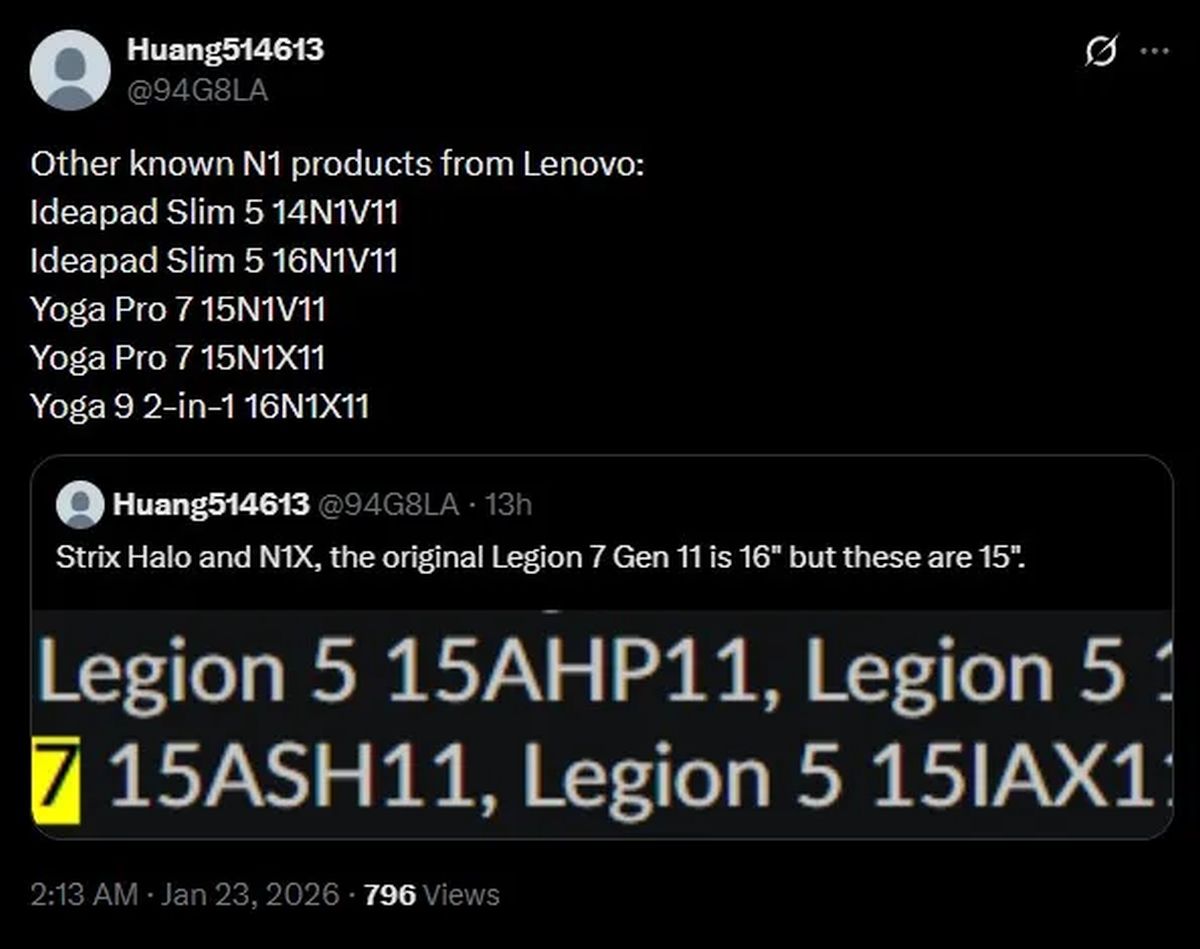
In this case, Lenovo Legion N1X laptop was labelled as Legion 7 15N1X11. For another matter, the now-removed post more or less confirms that NVIDIA’s elusive N1X SoC are designed for laptops, and not necessarily for desktops.
Lenovo isn’t the first brand in which the NVIDIA N1X SoC has made an appearance. Technically speaking, Dell was the first brand that was reportedly set to launch an XPS lineup – yeap, they brought back the XPS line after what can be considered a severe backlash from fans – running on the GPU maker’s custom ARM chip.
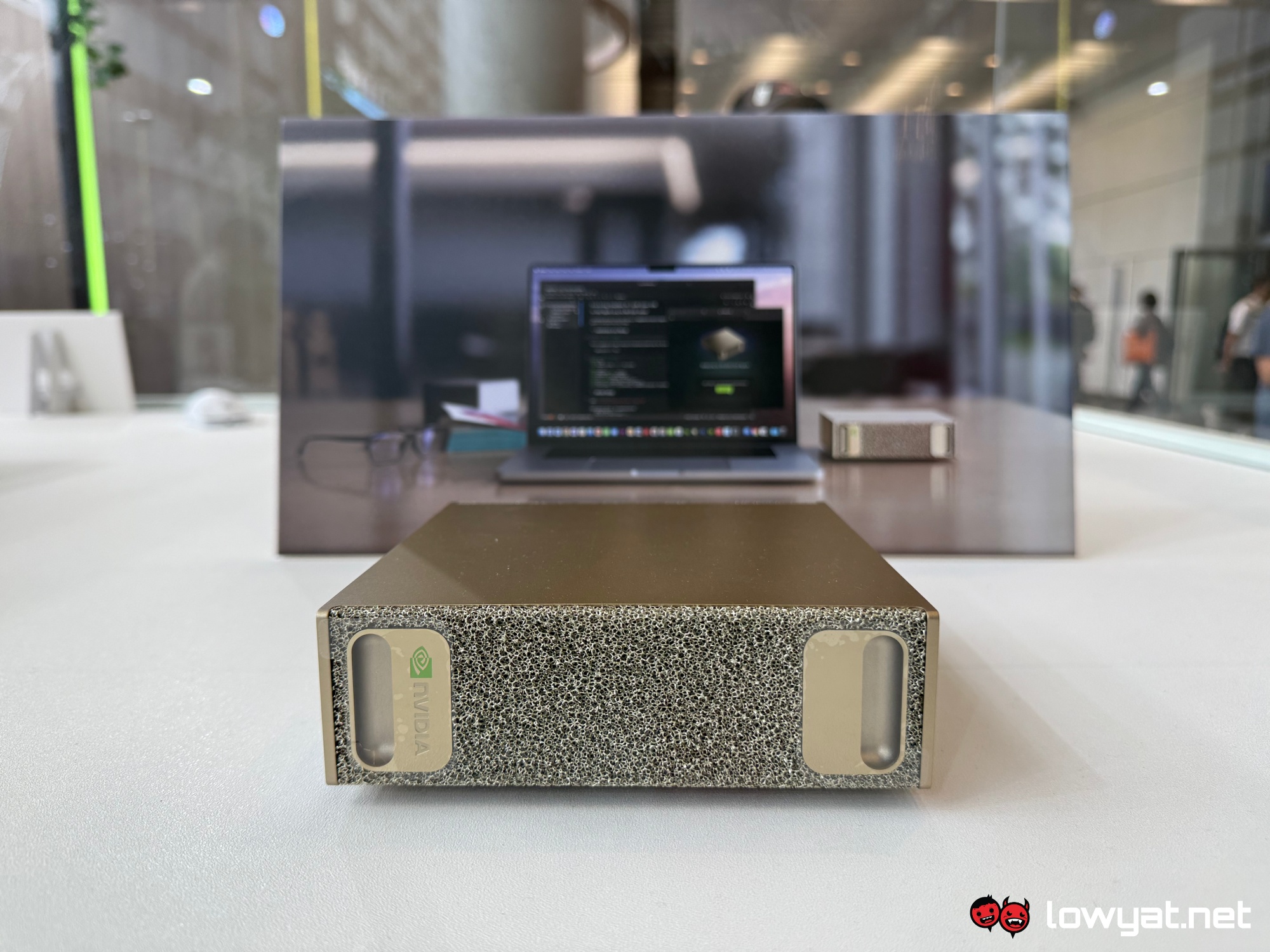
For that matter, little is known about the ARM-based N1X SoC. Based on available information, the chipset is believed to be based on the DGX Spark mini supercomputer that launched last year. In other words, we’re looking at a custom chip featuring a 20-core ARM CPU, plus a Blackwell GPU with 6,144 CUDA cores. In terms of power consumption, the DGX Spark is listed as having a 120W TDP, meaning that a laptop variant would likely have a lower power draw.
We’re thinking somewhere between the 35W and 55W envelope; the Ryzen AI 9 HX 370 has a peak TDP of 55W but by default, it’s more than capable running at 37W. So, if a baseline is to be made, we reckon that’s where NVIDIA may start.
(Source: The Verge, Videocardz, Lenovo)