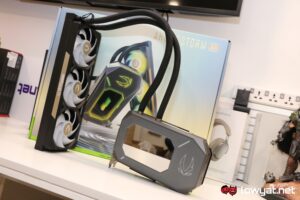
If you’re on the hunt for an NVIDIA GeForce RTX 5090, despite the fact that prices for the card, along with memory chips, have skyrocketed over the past several months, and more importantly, you’re actually looking for one of the more extremely-cooled AIO models, then cast your eyes on the Zotac Arcticstorm RTX AIO RTX 5090.
It’s the top-tier Blackwell GPU, it’s a watercooled card, and it’s so devilishly expensive, other people would start questioning your common sense.
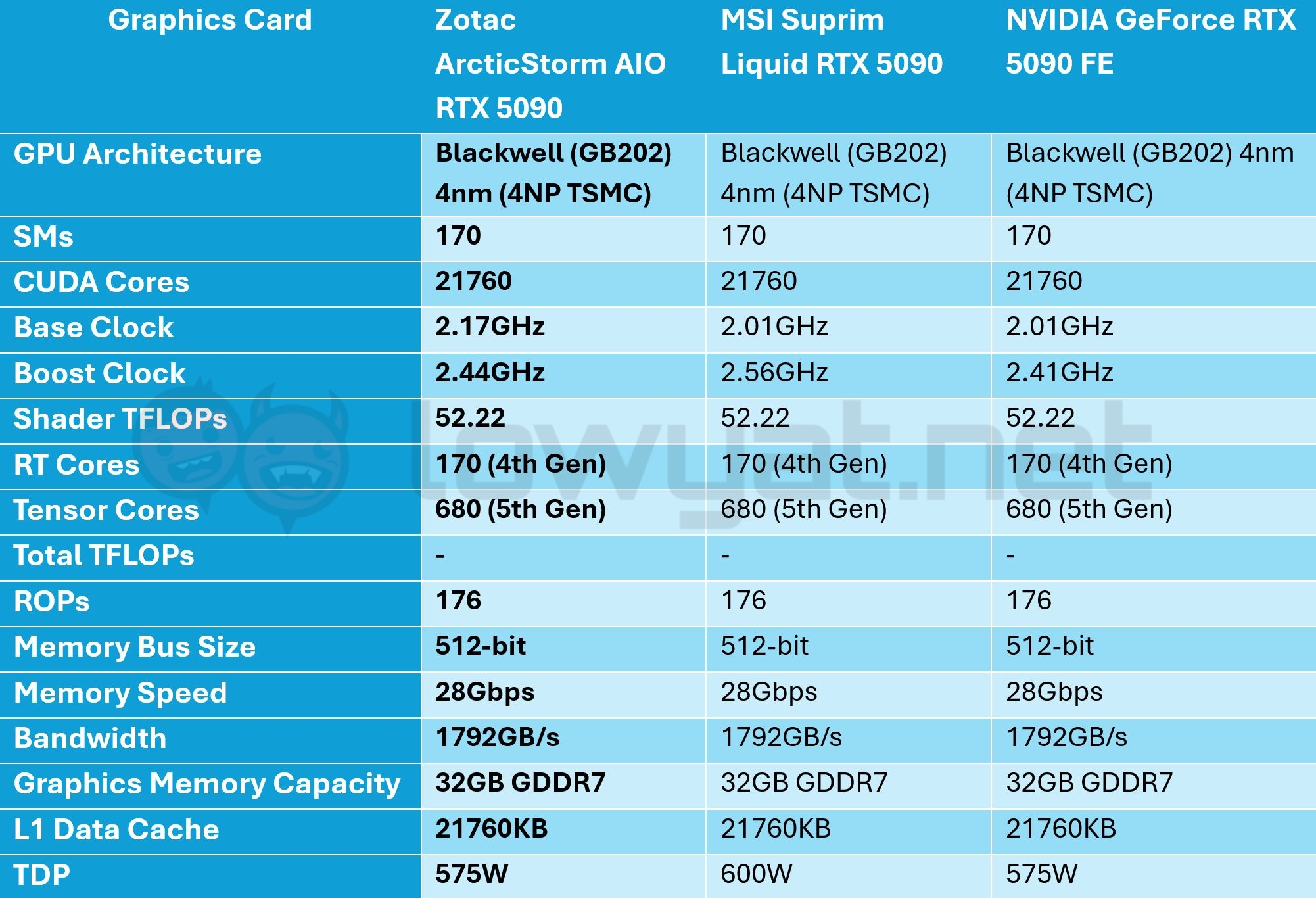
Specifications
Design
Alright, to be fair, at RM12,999, the Arcticstorm AIO RTX 5090 is pricey enough to make you do a spit take, but the RM17,999 price tag of the ASUS ROG Astral LC RTX 5090 would certainly make you choke on your own blood. If nothing else, this AIO-cooled GPU costs the same as MSI’s Suprim Liquid RTX 5090 that I reviewed near the beginning of 2025.
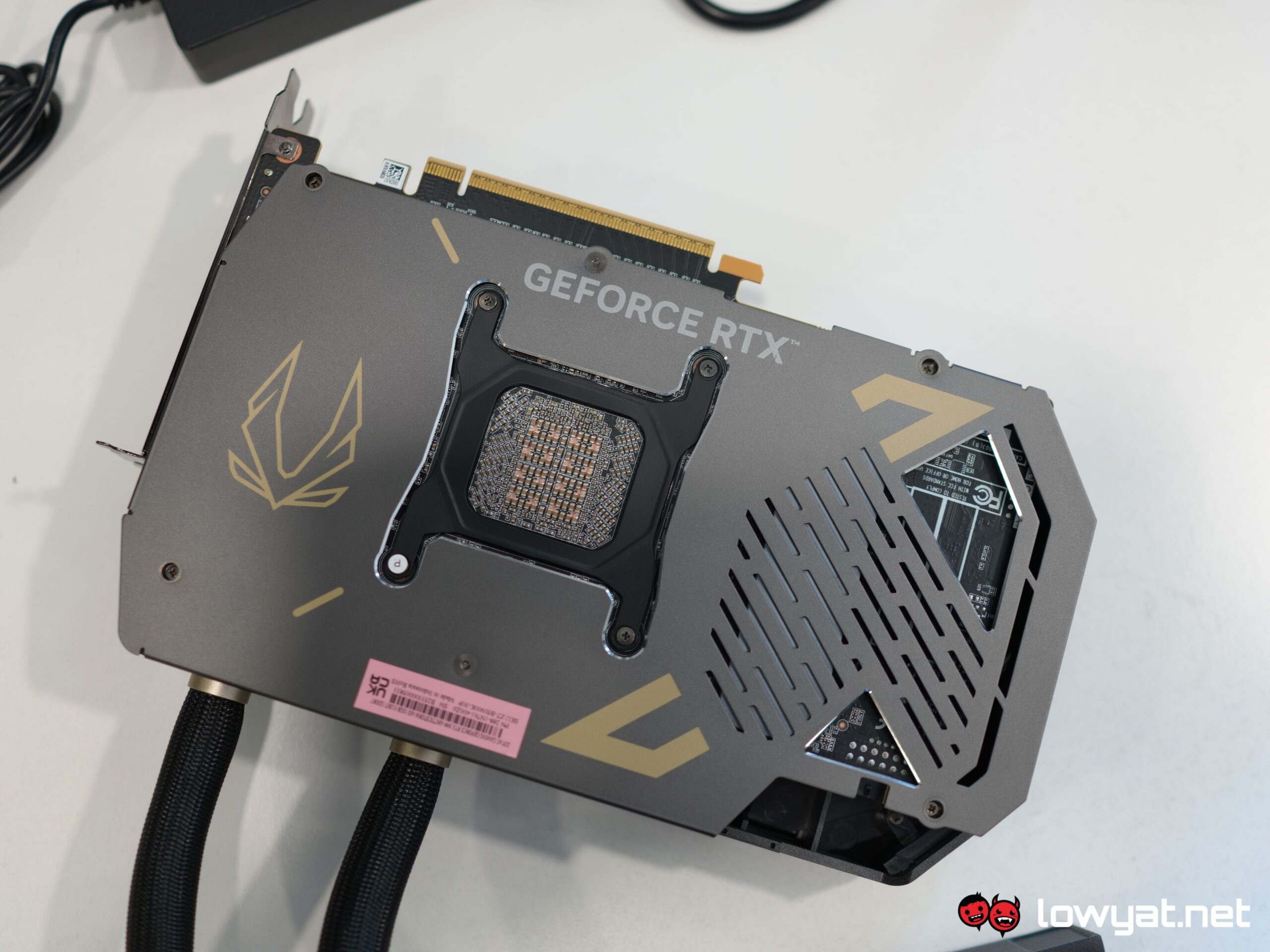
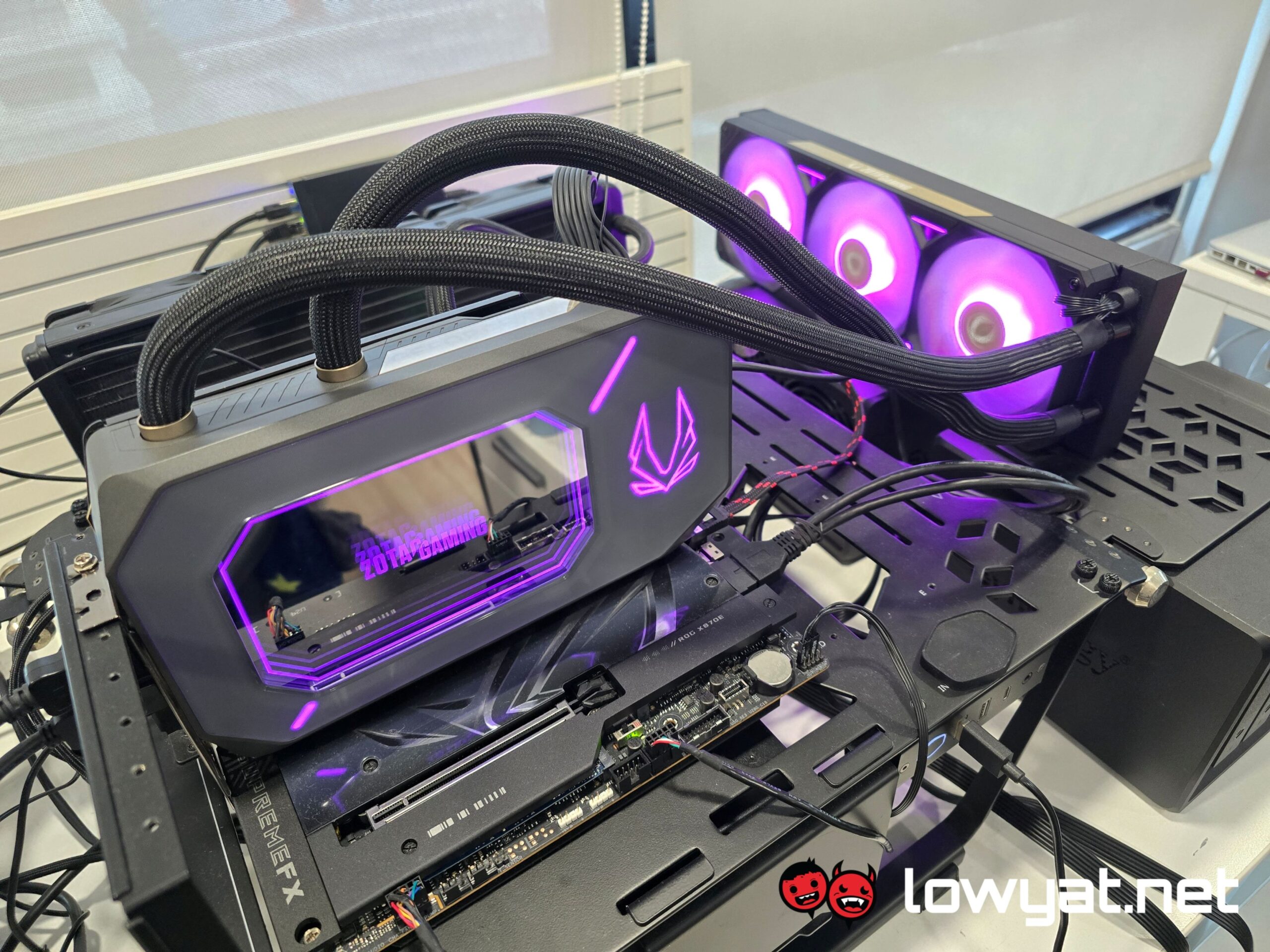
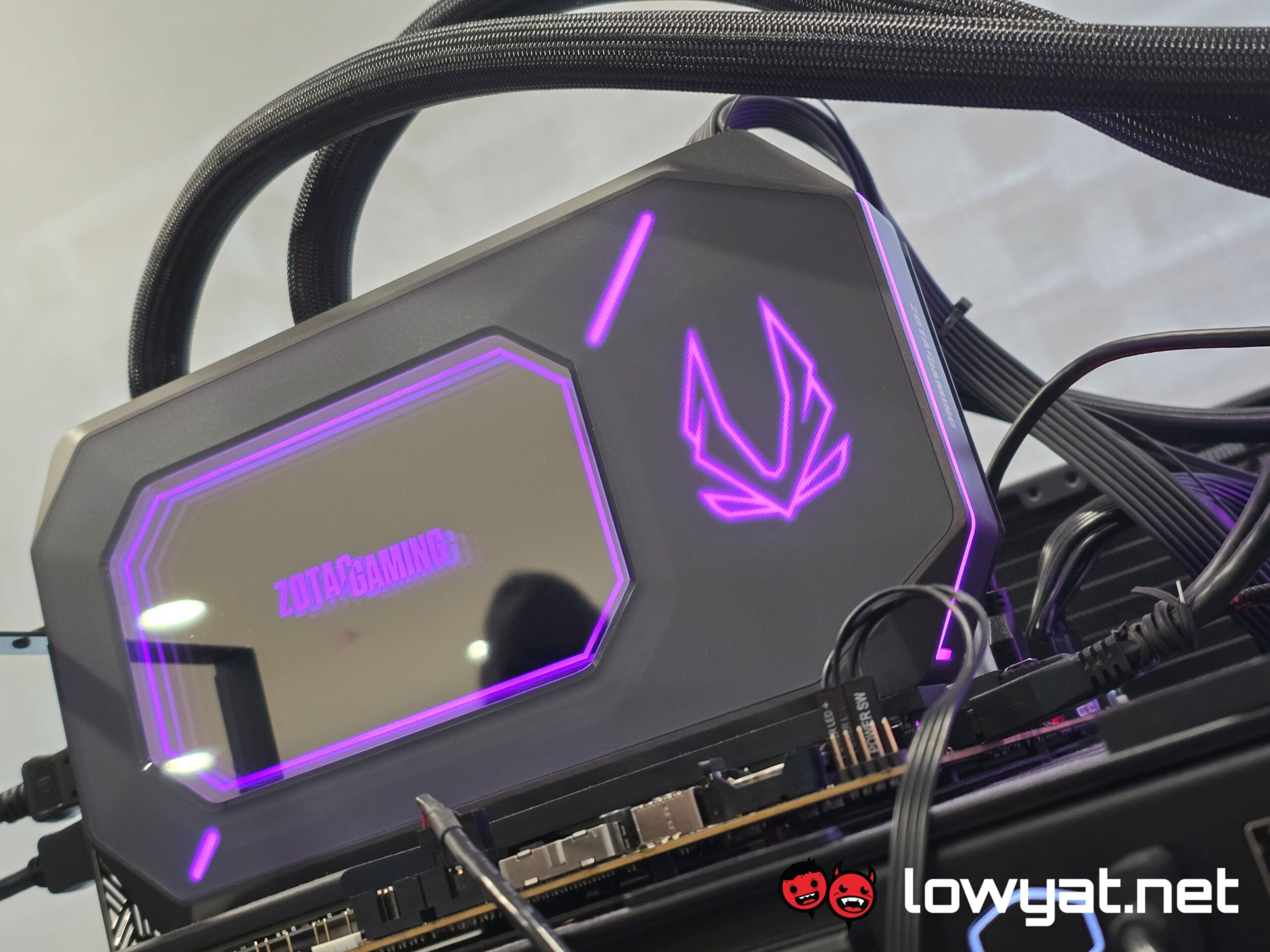
Price aside, the Arcticstorm AIO RTX 5090 follows another design template, or principle, if you will – while the GPU and its PCB has a waterblock attached to it, all the piping is directed outside to the massive 360mm radiator at the other end.
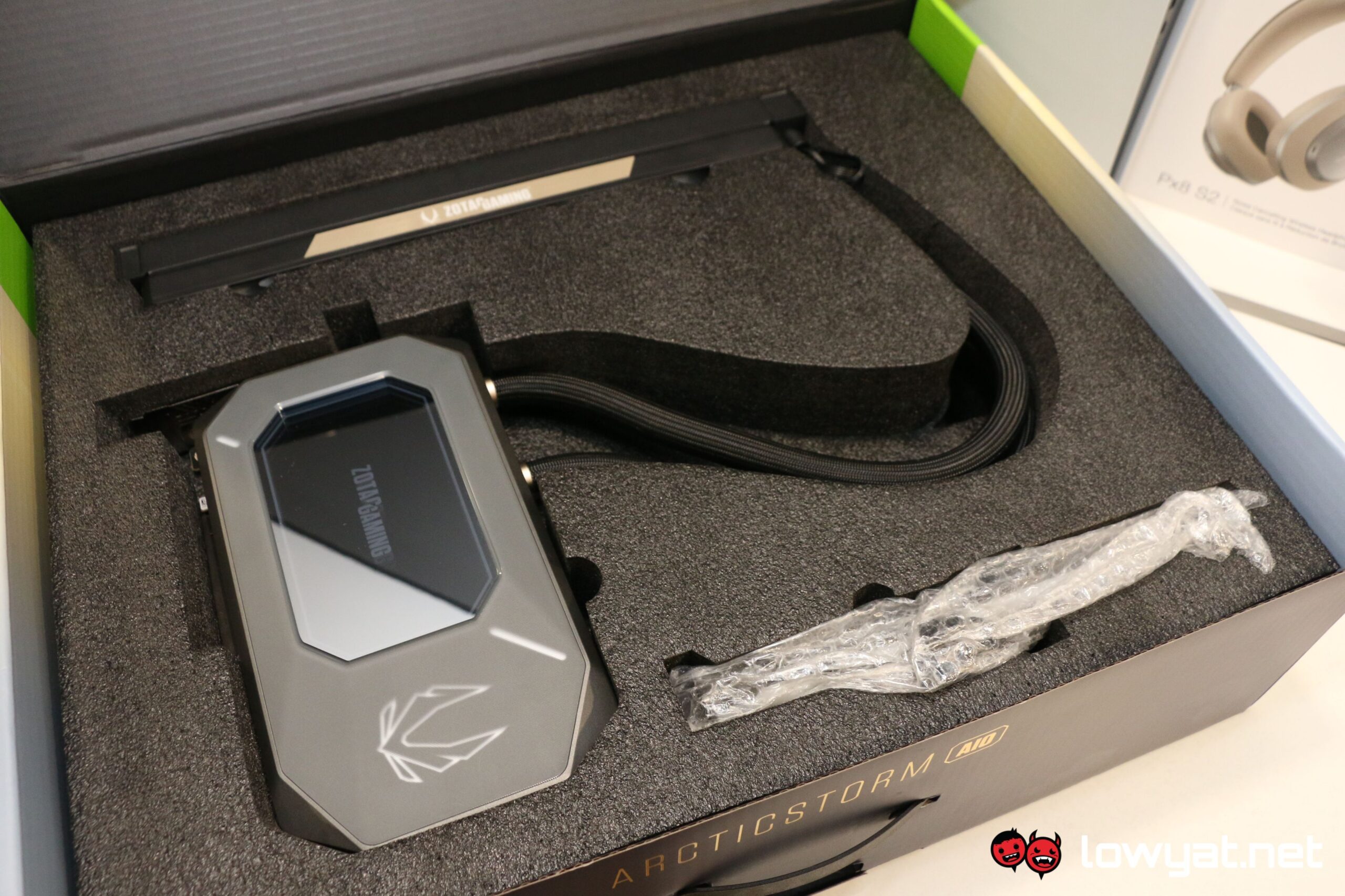
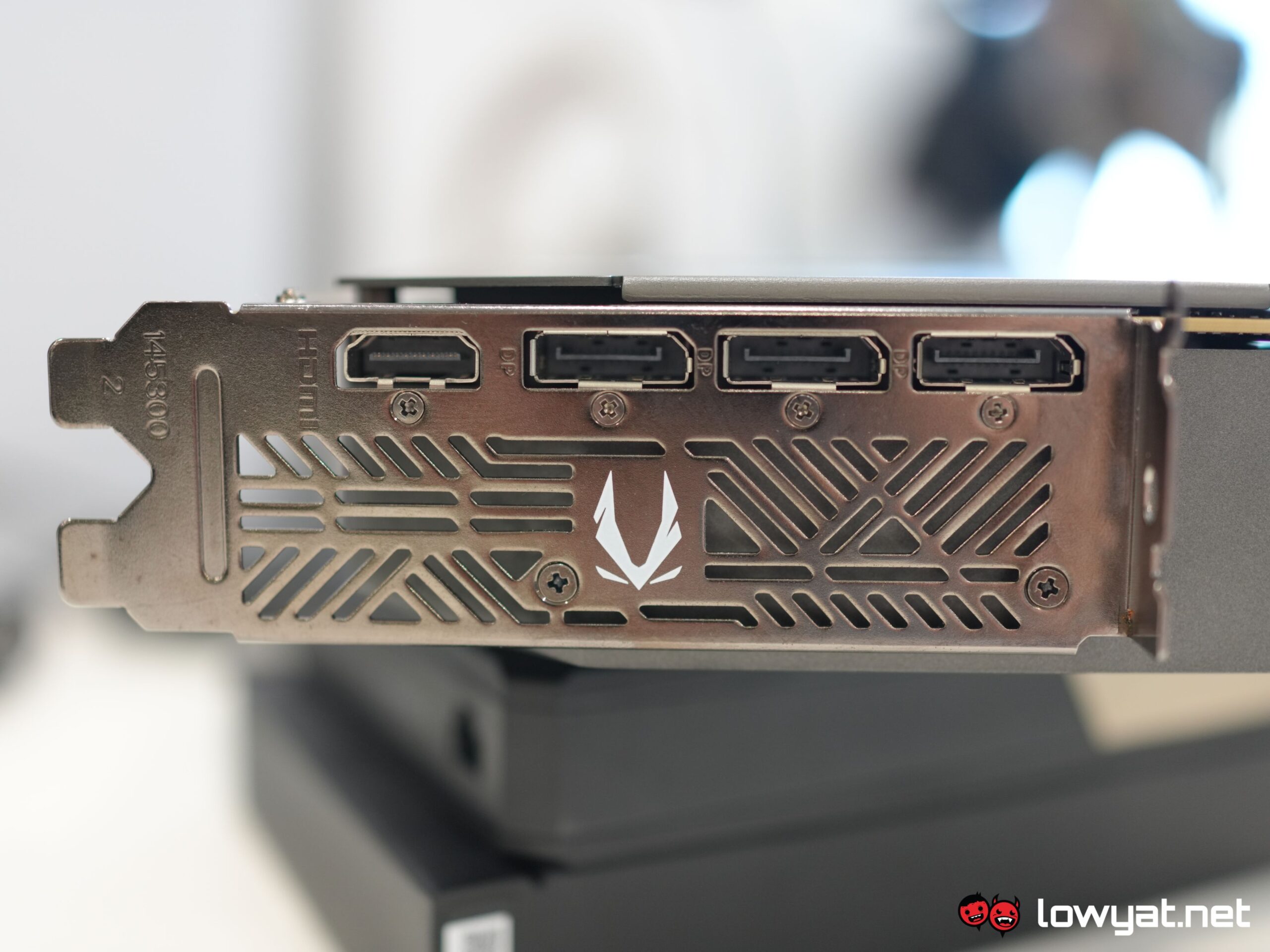
Unlike the MSI Suprim Liquid RTX 5090, though, Zotac opted instead of the have the pipes installed at the side facing the tempered glass panel. I basically tested the card on an open testbench but I can actually see how this design could present some level of difficulty when being installed into a rig, especially if said rig is slightly constrained for space. On that note, consider a sizable desktop casing that accommodates the card and its attachment.
Screwed into the radiator are three 120mm fans, which again, is an industry standard. Everything about the Arcticstorm AIO RTX 5090 is self-contained, too; all the relevant connectors, plus the fans, are attached to a main board inside of the system, and the only manual assembly needed is the installation of the card into your system.
Testbench

Then, as now, my testbed includes the Ryzen 9 9950X, along with 32GB DDR5-6000 RAM. For comparison, I will be comparing it to the RTX 5090 FE.
I’ve also streamlined the list of control titles for real-world benchmark, as some of them do take more of an advantage from NVIDIA’s current iteration of its upscaling technology.
Benchmarks, Temperature, And Power Consumption
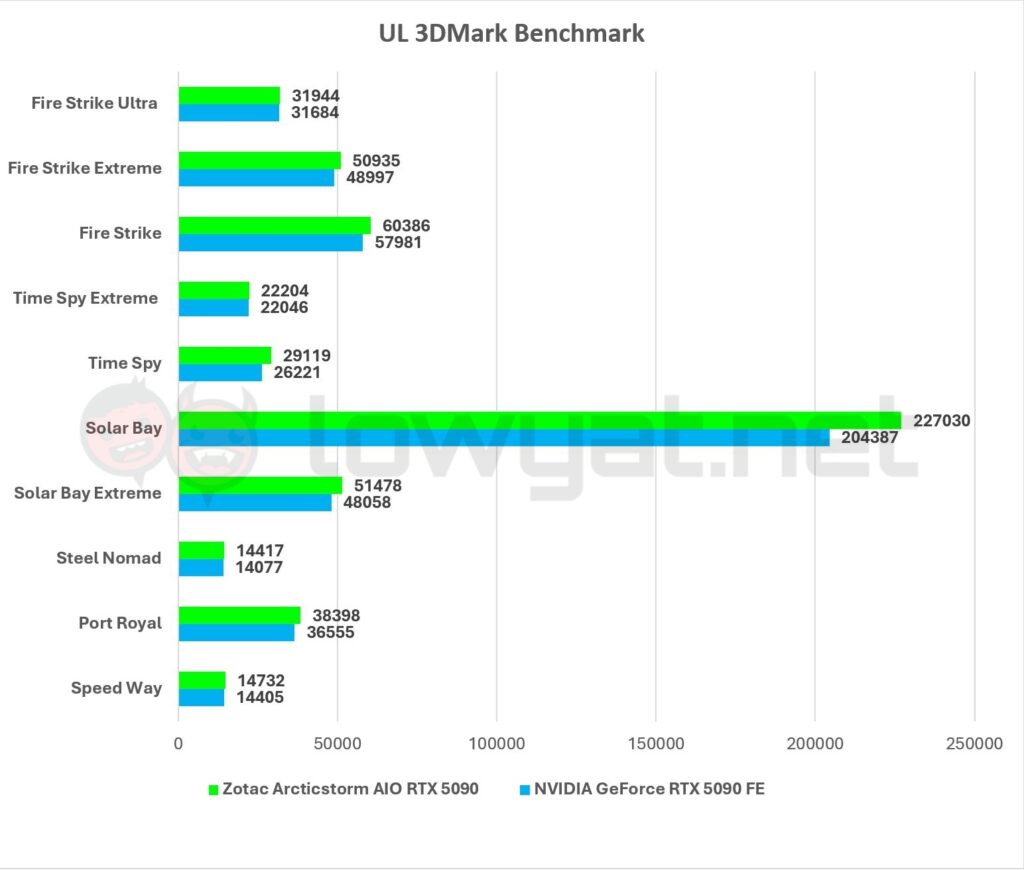
Synthetically, this card is still an RTX 5090, but as it has been given that extra layer of love through liquid cooling, the card can slightly outpace the RTX 5090 FE, albeit by a just a small margin. 3Dmark’s Solar Bay test, in particular, is the only test in which the card really pulls ahead of the FE, by approximately 10%.
I am kind of surprised by its gaming performance, though. And by that, I mean that the numbers are all over the place, and across all three resolutions.
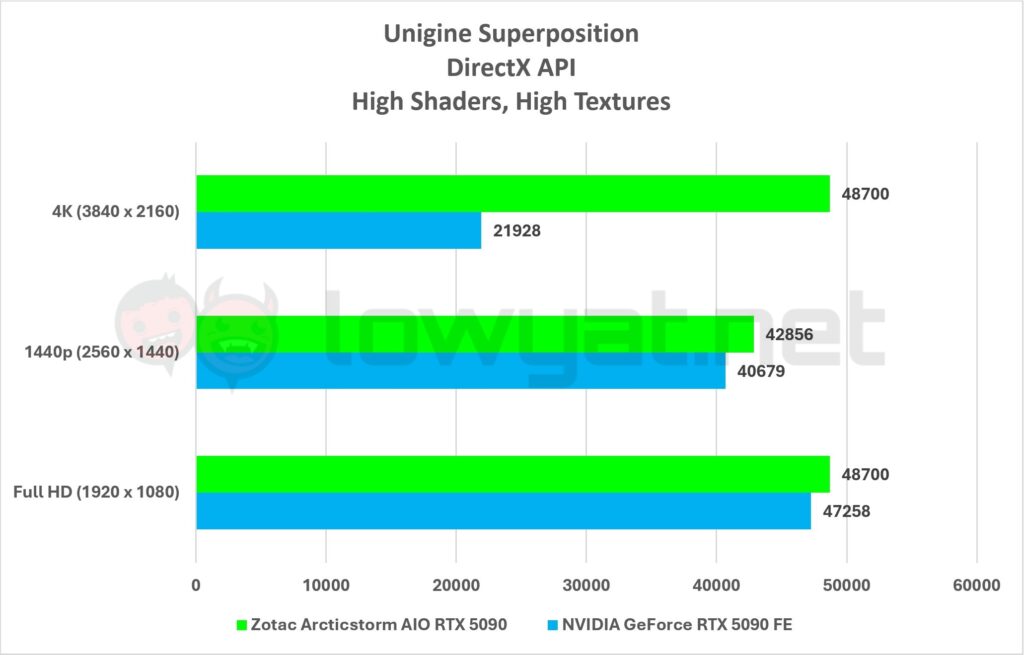
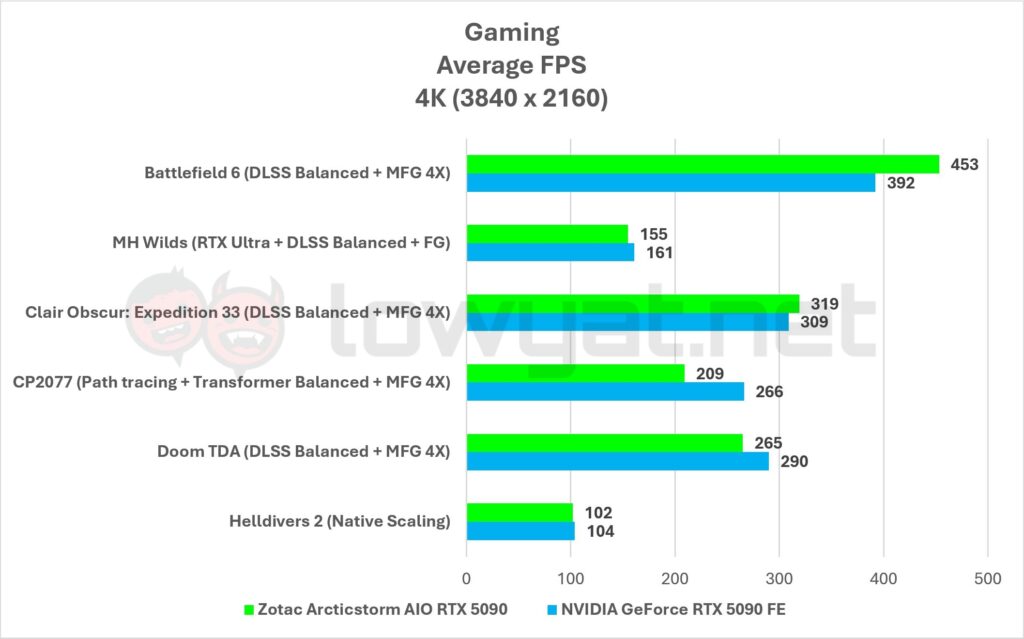
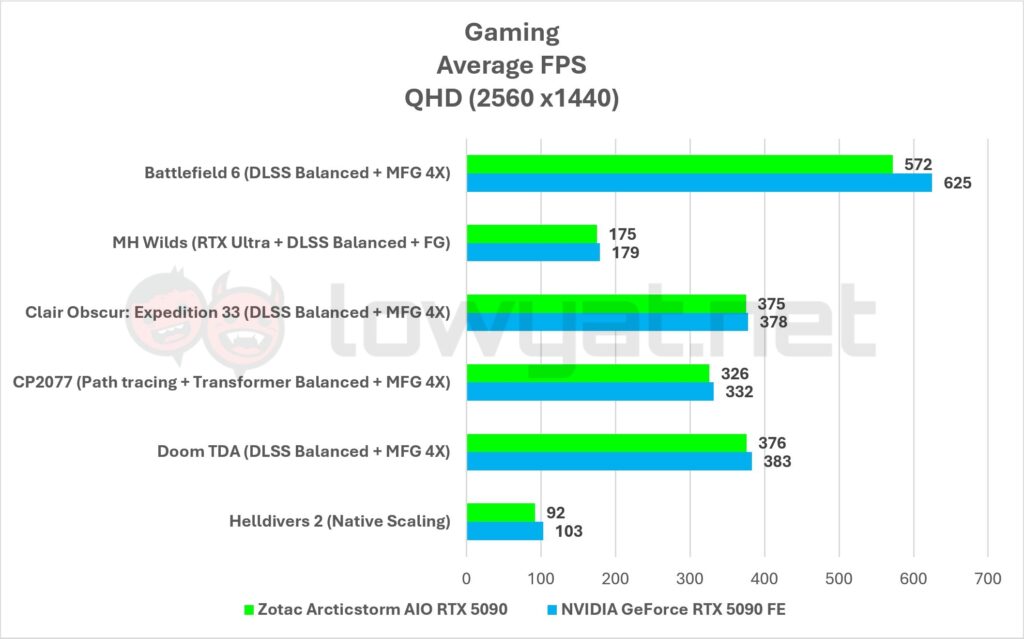
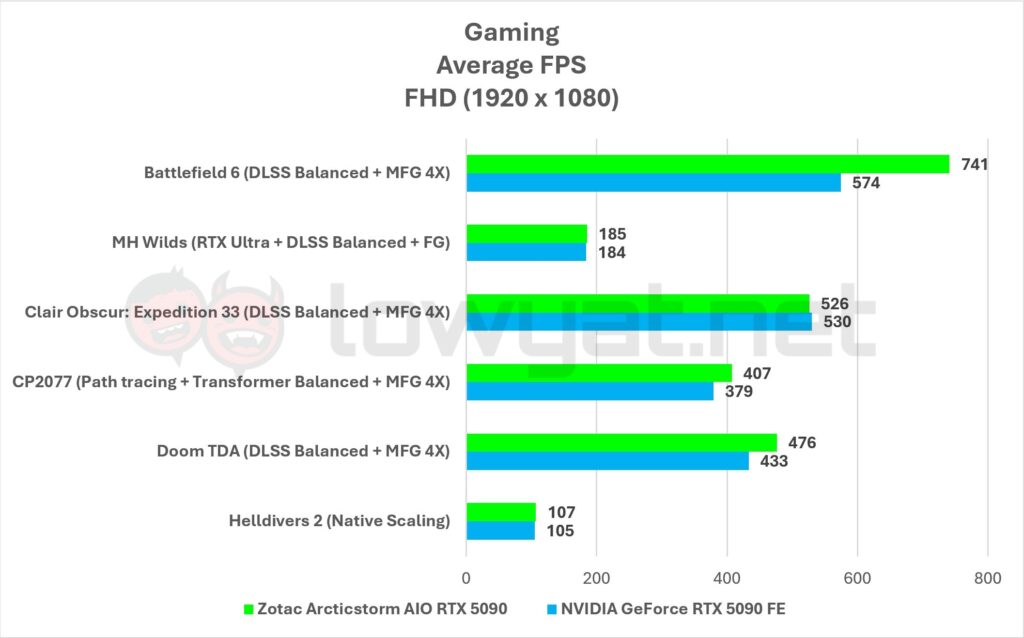
At the bare minimum, all my control titles run at more than 100 fps across the board, but again, there is an inconsistency in the framerates compared to the RTX 5090 FE. Take Battlefield 6 as an example: with DLSS and MFG turned on, there’s just no lack of frames that you can use the excuse “my framerate isn’t high”. Yet, at 4K QHD resolution, the card trails behind the RTX 5090 FE ever so slightly for a handful of titles.
Again, the average frames are well above 100 fps, but if I have to nitpick at this point, Helldivers 2 is the one title that tends to give me grief on a regular basis. It’s the one game in this day and age that doesn’t use ray tracing or use any of the major upscaling tech, which is good in its own way, but that’s also due to the nature of the game’s engine.
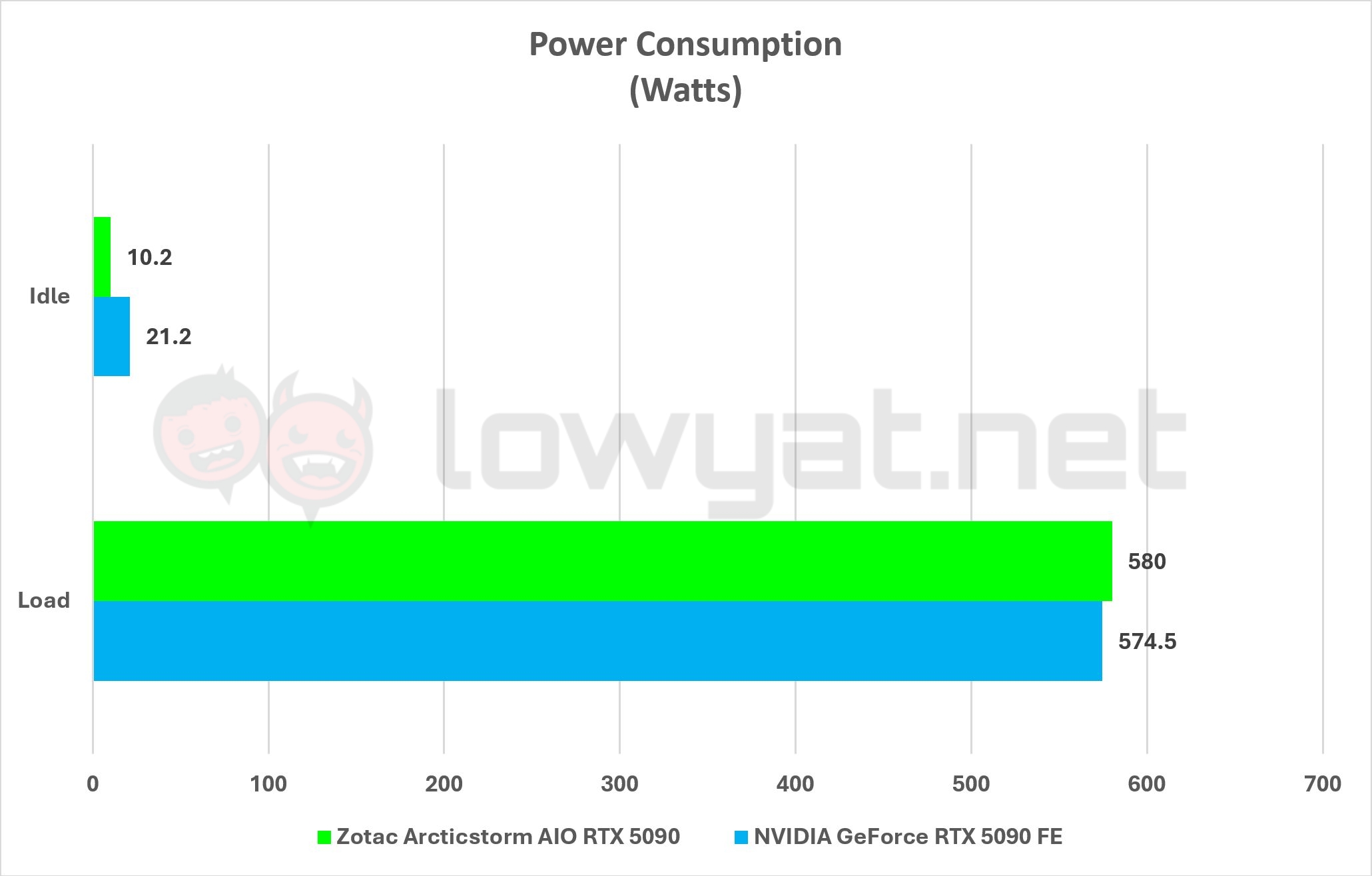
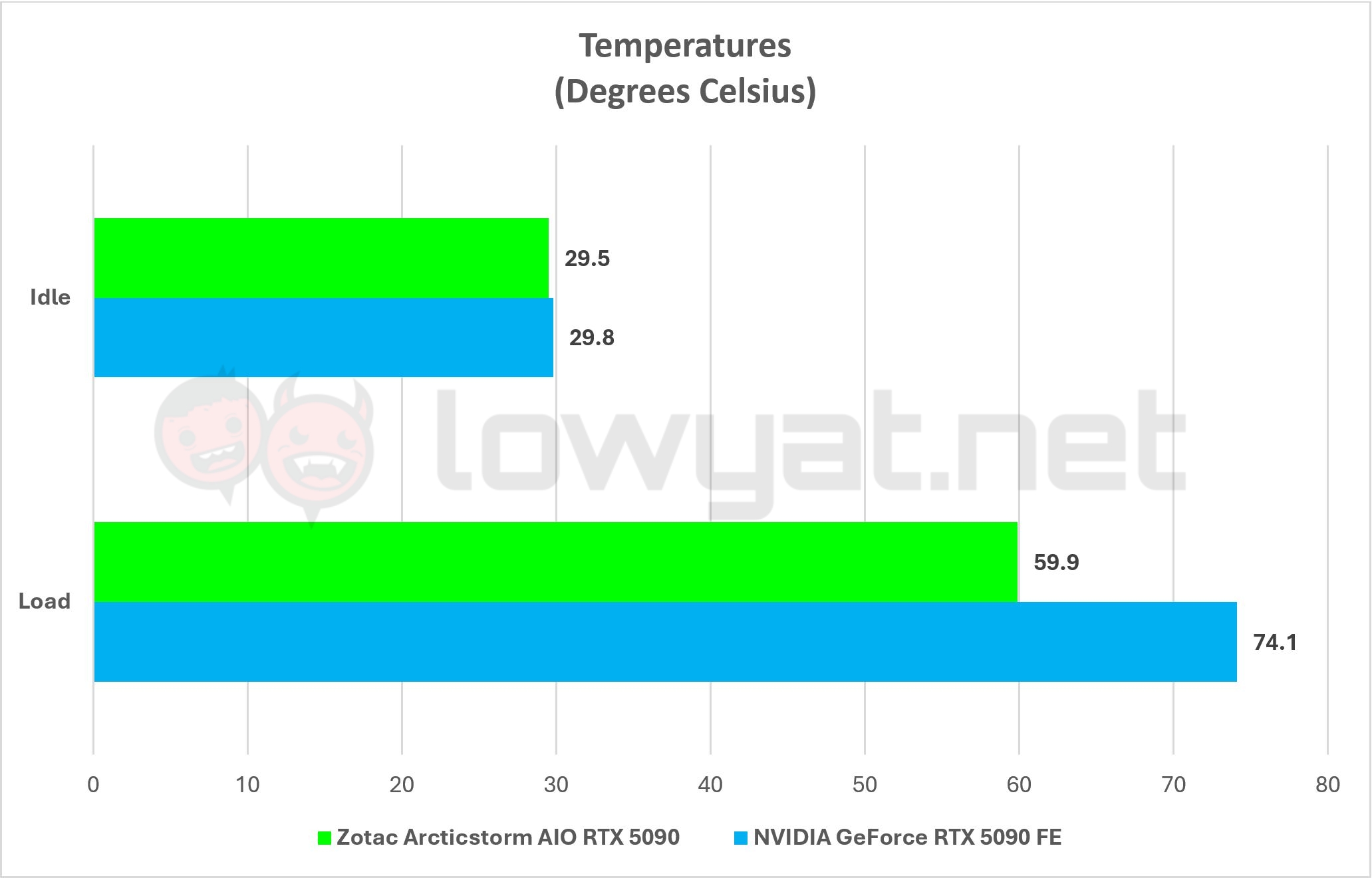
Power consumption of the card is actually impressive. Considering the hardware being used to cool it, it only pulls slightly more power than the RTX 5090 FE at 580W. Of course, having a 360mm radiator attached to the card keep the Arcticstorm AIO RTX 5090 dramatically cooler than normal, with peak temperatures rarely ever going above 60°C.
Conclusion
As I stated at the beginning of this review, the Zotac Gaming Arcticstorm AIO RTX 5090 is not, by any means, a graphics card for the average gamer. And by average, I mean someone who is spending, at the time of this publication, RM13,000 on the whole rig, not a single component.
This is a card for those that seek both the bragging rights of having NVIDIA’s top-of-the-line Blackwell-powered GPU in their rig, and the vanity that such custom-cooled cards like these provide. With regards to the last one, I’m almost certain that whoever purchases this card isn’t going to hide their rig underneath of their desk and away from the lustful gazes of PC gamers. Yeah, I’m talking directly to you, you preening lady or man of the night.