
Prasarana Malaysia announced that its Rapid On-Demand service will adopt a fixed fare of RM2 starting February 2026. The company’s head of planning and strategy, Sharul Azwa Abdul Rani, said the move marks the service’s exit from its Proof of Concept phase, which began following its introduction in May 2023.
The new Rapid On-Demand fare sits only RM1 above the current promotional rate, which remains relatively affordable. As before, the RM2 charge applies uniformly across all supported routes.
Sharul Azwa noted that the fare will also apply to My50, Rapid Kota, Rapid Kembara, and Rapid Keluarga pass holders. For Rapid On-Demand operations in the Klang Valley, users with Kad Konsesi Rapid Pelajar and Rapid Emas will continue to receive a 50% discount, while Kad Konsesi Rapid Mesra (OKU) holders can ride for free.
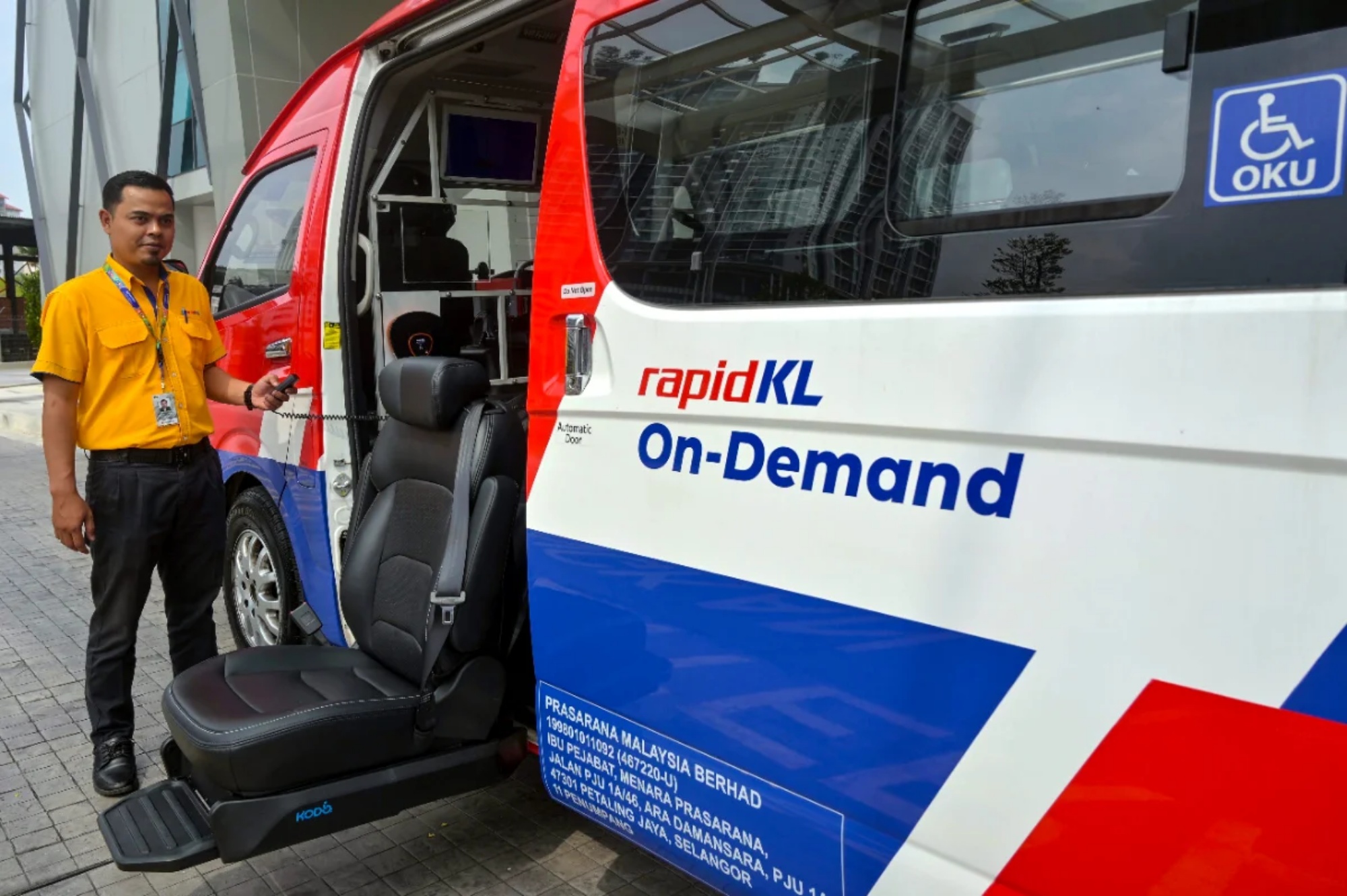
Rapid On-Demand is Prasarana’s demand-responsive transport (DRT) service, designed to address first- and last-mile connectivity gaps within the public transport network. The app-based, ride-pooling service complements existing Rapid KL rail and bus routes by providing more flexible connections between residential areas and nearby transit hubs.

Over time, Prasarana expanded the service to additional zones across the Klang Valley and introduced selected coverage in Penang. During this period, passengers booked rides through multiple third-party platforms, including Kummute, Trek Rides, and Mobi, depending on the service area. In 2025, Prasarana launched a dedicated Rapid On-Demand app, consolidating the previously separate booking platforms into a single interface.
Beyond fare changes, Sharul Azwa revealed that Prasarana plans to gradually deploy 300 electric vans into the Rapid On-Demand fleet between late 2027 and the end of 2028. Of these, Prasarana will deploy 130 vehicles in the Klang Valley and 170 in Penang as the service continues to expand.
“In the Klang Valley, we will add 22 new zones, while we will introduce 23 new zones in Penang,” she said. Rapid On-Demand currently operates across 82 zones, with 71 in the Klang Valley and 11 in Penang.
(Source: Bernama)