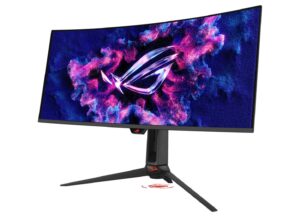
It appears ASUS has revealed two gaming monitors ahead of CES 2026. These monitors are the ROG Swift OLED PG34WCDN and the standard-sized PG27UCWM.
The ROG Swift OLED PG34WCDN is the ultrawide gaming model of the two, sporting a 34-inch QD-OLED panel with 3,440 x 1,440 resolution, a 21:9 aspect ratio, and a curvature level of 1800R. For the uninitiated, the bigger the number, the less severe the curvature of the display, and vice versa. In this case, it’s basically curved just enough to keep users immersed. More importantly, the monitor has a 360Hz peak refresh rate, along with a 0.03ms GTG response time, 10-bit colour support, and a 99% DCI-P3 colour gamut.
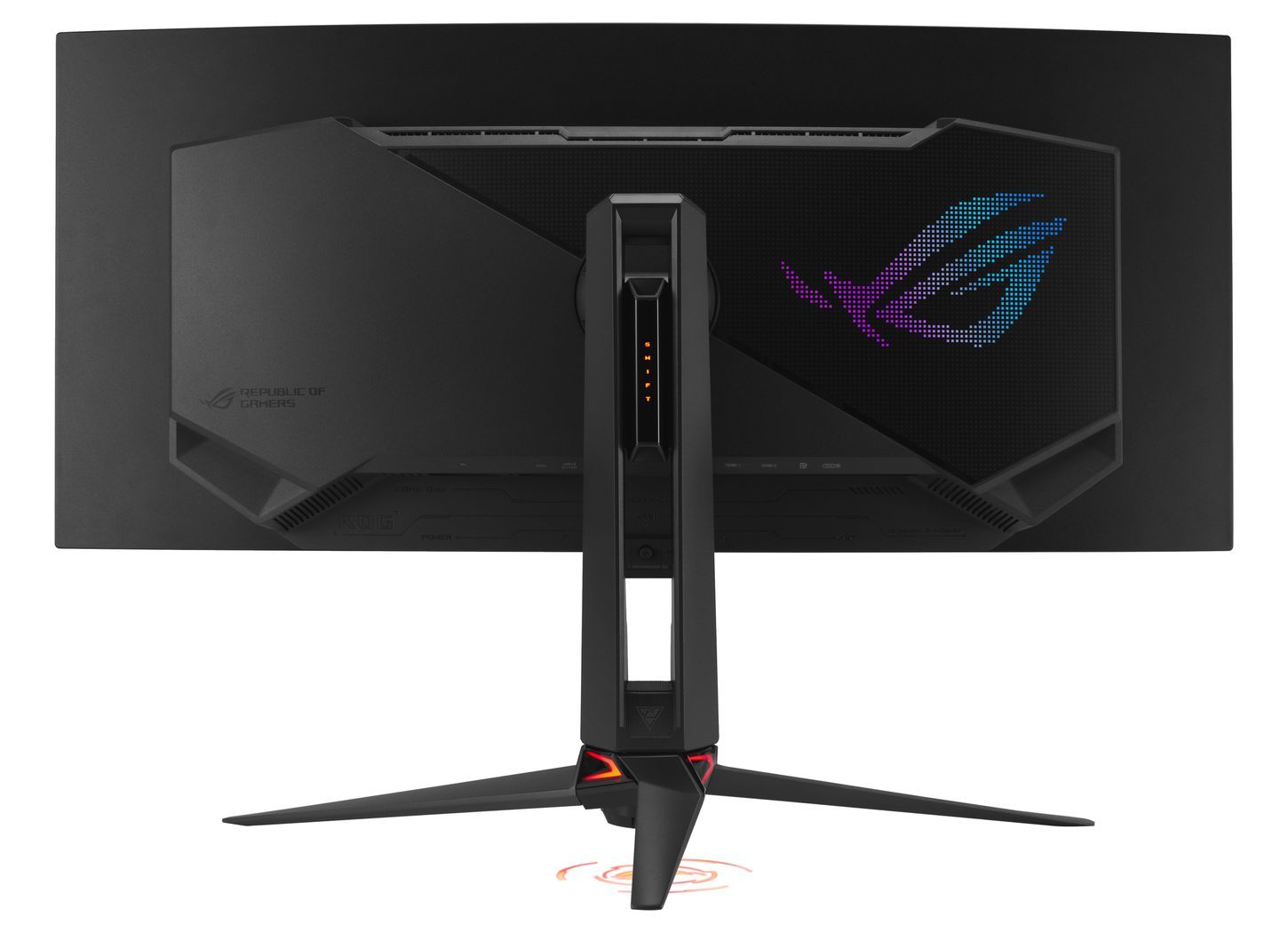
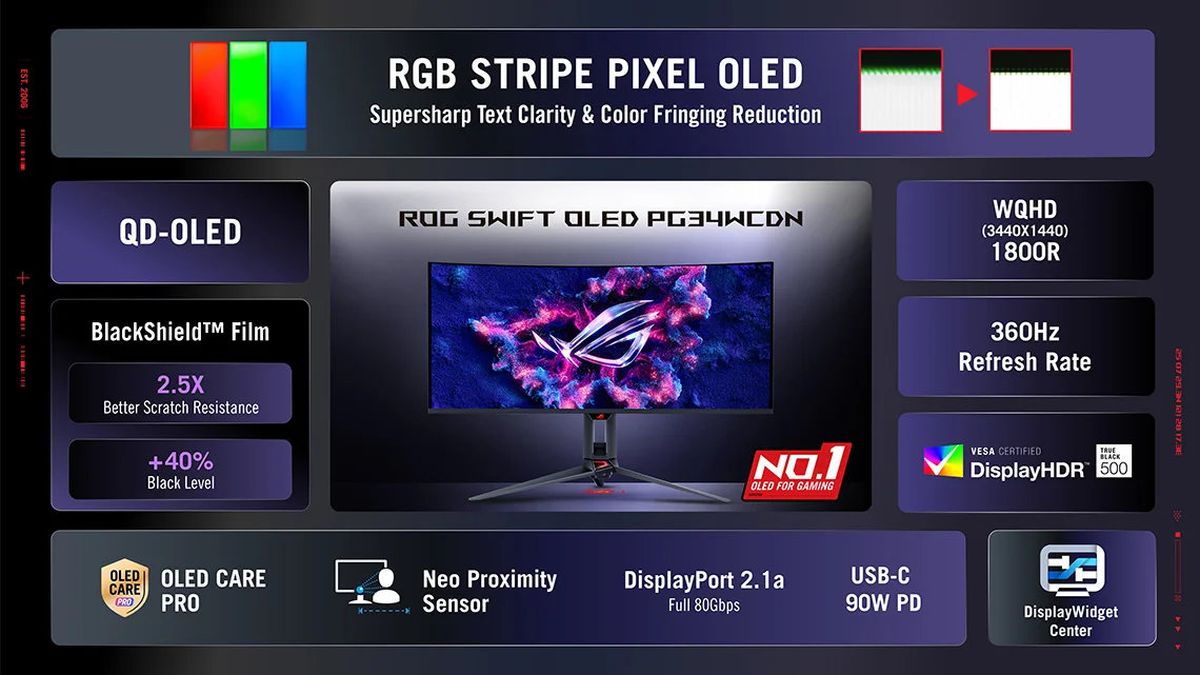
The new panel uses the new RGB-stripe sub-pixel layout, in order to reduce colour fringing and improve text clarity, the latter being an issue on older ultrawide gaming monitors. This, by the way, is the BlackShield coating that was rumoured at the end of last year, which also happens to produce even deeper, inkier blacks.
Moving on, the ROG Swift PG27UCWM is the second, non-curved gaming monitor of the duo. As its name suggests, it’s s 27-inch monitor that uses the new 4th-gen Tandem WOLED panel, courtesy of LG. Like its QD-OLED counterpart, it also uses an RGB-stripe sub-pixel layout, and comes with a higher pixel density of 166 ppi.
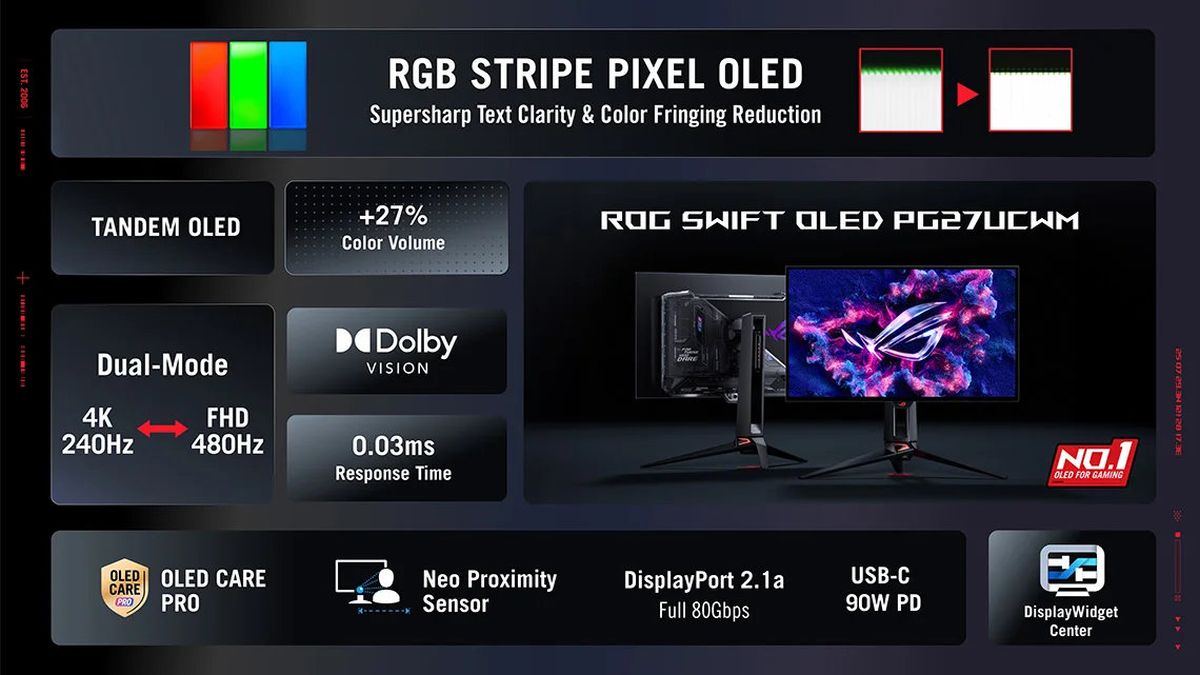

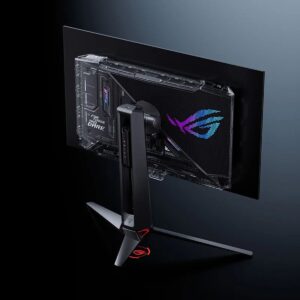
As for its performance, the ROG Swift PG27UCWM is a dual-mode monitor, meaning that it run either at 4K at 240Hz, or Full HD at 480Hz. Additionally, it is also a HDR10 certified monitor.
Other specifications of the monitor include DisplayPort 2.1a, which supports UHBR20, and USB-C PD of up to 90W. Also, it comes with ASUS OLED Care Pro, plus a Neo Proximity Sensor that dims the panel when it detects no one in front of it, before turning off the display, in order to reduce burn-in risk.
The only thing missing from this list is pricing, a detail that ASUS is likely to only reveal later down the road.
(Source: Videocardz)